Competency Gap Analysis: Master Workforce Skills
By Synopsix · July 7, 2026 · 17 min read
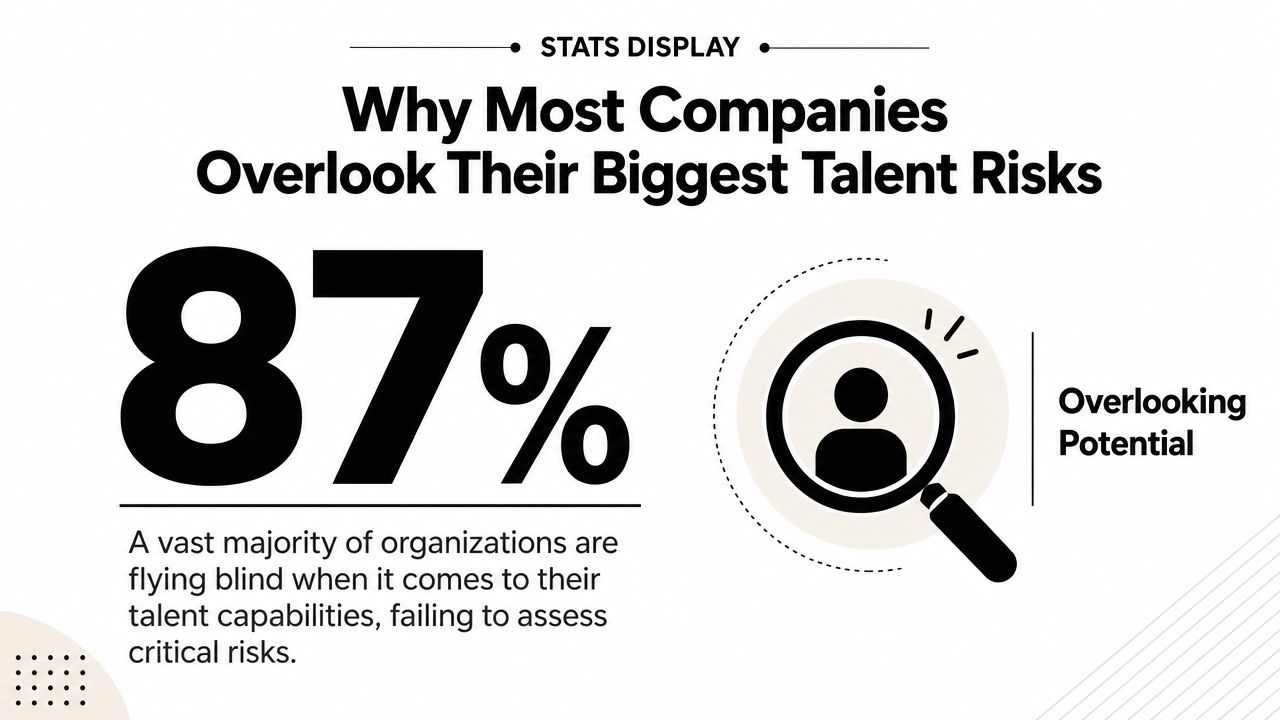
87% of organizations worldwide are either experiencing or expect skills gaps within the next 12 months, and those unaddressed gaps directly hinder growth and innovation, according to this skills gap analysis reference. That statistic changes the conversation. Competency gap analysis isn't an HR paperwork exercise. It's a business risk discipline.
The bigger miss is that many companies still define a gap too narrowly. They track certifications, systems knowledge, and task proficiency, then act surprised when a technically strong hire stalls, a manager derails, or a promoted leader creates friction across a team. Skills matter. Behavior determines whether those skills translate into performance, trust, and scale.
That's why the most useful competency gap analysis combines two lenses. One measures what people can do. The other helps predict how they're likely to operate under pressure, ambiguity, collaboration demands, and leadership load. If you want smarter people decisions, that combination matters.
predict-human-behavior-synopsix-smarter-people-decisions
Why Most Companies Overlook Their Biggest Talent Risks
Most companies don't miss talent risk because they don't care. They miss it because they look in the wrong place.
They review résumés for hard skills, ask managers for impressions, and compare employees against role expectations that were often written too broadly to be useful. Then they conclude they have a training problem, when in reality they may have a role design problem, a selection problem, or a behavioral mismatch that won't be fixed by another course.
Technical strength doesn't reveal the whole risk
A traditional competency gap analysis usually starts and ends with technical capability. Can the analyst build the model, can the engineer use the stack, can the sales leader run the forecast. Those are valid questions, but they aren't enough.
People rarely fail only because they lack technical knowledge. They fail because they struggle to influence, adapt, prioritize, communicate, or lead through uncertainty. Those aren't secondary concerns. They often determine whether a person can perform at the next level, not just the current one.
> Most leadership mistakes aren't caused by missing one technical skill. They're caused by overestimating readiness based on technical success alone.
Companies create avoidable blind spots. A team can appear fully staffed on paper and still carry serious execution risk because nobody has mapped the behavioral competencies behind decision quality, collaboration, and resilience.
Competency gaps are strategy gaps
When I've seen competency gap analysis work well, it wasn't treated as a one-off talent review. It was tied directly to business priorities. Market expansion, a new operating model, succession planning, post-merger integration, frontline productivity, manager effectiveness. Those are the moments when capability gaps become visible, expensive, and urgent.
The practical shift is simple:
A strong competency gap analysis gives leaders something far more useful than a training list. It shows where the organization is exposed, where promotion decisions are risky, and where targeted development or hiring will have the greatest payoff.
Building Your Competency Framework
A weak framework produces weak analysis. If the competency model is fuzzy, every rating discussion turns into opinion.
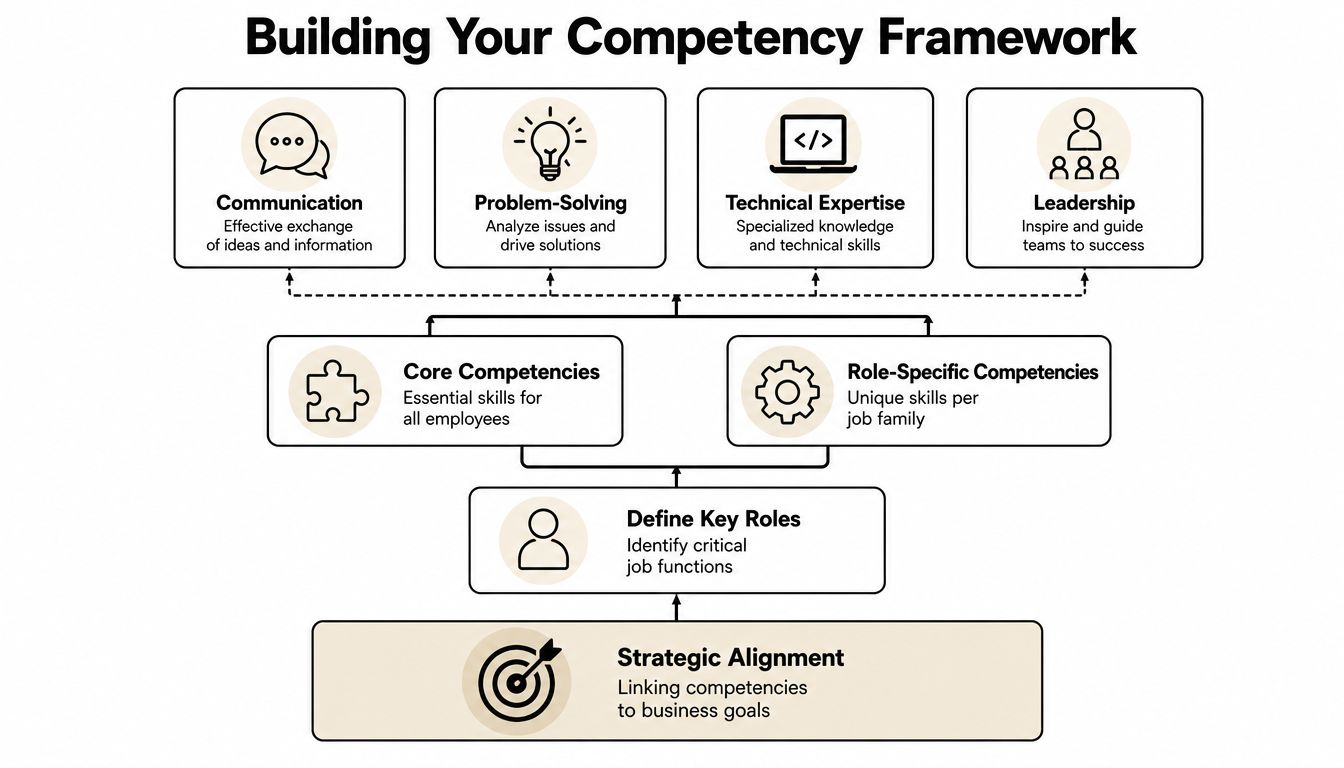
The fix is to build the framework in layers. Start with what the business needs to execute strategy. Then define what people in critical roles must demonstrate, not just what they should vaguely “be good at.” A structured taxonomy often includes 25 to 30 general skills and 5 to 10 specialist skills for specific business areas, as outlined in [Coursera's overview of competency gap analysis](https://www.coursera.org/enterprise/articles/competency-gap-analysis).
Start with three competency tiers
I've found the cleanest models separate competencies into three groups.
1. Core competencies These apply across the organization. Think judgment, communication, collaboration, execution discipline, and learning agility. They reflect how work gets done in your environment.
2. Functional competencies These are role-family or department specific. Financial modeling for FP&A, pipeline inspection for revenue leaders, root cause analysis for operations, regulatory interpretation for compliance.
3. Behavioral competencies Many frameworks often stay too shallow regarding these. Behavioral competencies describe the observable patterns that shape consistency, influence, adaptability, and leadership readiness.
That third tier is what makes the framework more predictive. It helps distinguish someone who can perform under ideal conditions from someone who can handle complexity, friction, and scale.
Write competencies so managers can actually rate them
A competency shouldn't read like a poster value. It should describe behavior a manager could observe and discuss with evidence.
Compare these examples:
> Practical rule: If two managers could interpret the competency in completely different ways, the wording isn't finished.
Use proficiency scales before you assess
Before anyone starts rating current capability, define the scale. A consistent proficiency scale such as 1 to 5 or Foundational to Expert reduces subjectivity and gives managers a common language, as noted in [this guide on skills gap analysis methodology](https://chronus.com/blog/skills-gap-analysis).
Good scales also define what each level looks like in practice. “Advanced” in one role should not automatically mean “expert” in another. That drift is one of the reasons organizations end up with bloated high-performer lists and weak succession plans.
If you're building the model from scratch, a useful companion is this guide on [competency mapping](https://synopsix.ai/blog/what-is-competency-mapping). It helps teams connect role expectations to actual business outcomes instead of generic skill catalogs.
Accurately Assessing Current Capabilities
A competency model is only as useful as the evidence behind the ratings. Weak assessment design creates false confidence, misses behavioral risk, and leads to expensive calls on hiring, promotion, and succession.
A reliable assessment pulls from more than one source. AIHR recommends combining inputs such as self-assessments, manager evaluations, 360 feedback, performance data, and skills testing in its [guidance on skills gap analysis](https://www.aihr.com/blog/skills-gap-analysis/). That mix matters because technical skill and behavioral capability fail in different ways. A person can score well on role knowledge and still struggle with judgment, influence, or adaptability under pressure.
Where traditional methods help and where they break
Manager evaluations are useful because they capture execution in context. They show whether someone delivers consistently, handles trade-offs well, and operates at the level the role requires. Performance reviews add a record of results over time. Work samples and tests are better suited to technical competencies because they show what the person can do, not just how they are perceived.
Self-assessments still belong in the process, but they should never carry the decision. They are useful for surfacing confidence, career intent, and perceived readiness. They are weak as stand-alone evidence. For a practical explanation of stronger assessment design, this [competency assessment guide](https://synopsix.ai/blog/what-is-competency-assessment) lays out the difference between opinion-based rating and defensible evaluation.
The practical comparison looks like this:
| Assessment method | What it does well | Where it falls short | |---|---|---| | Self-assessment | Surfaces confidence, interest, perceived readiness | Distorted by self-perception bias | | Manager evaluation | Adds observed performance context | Can reflect recency bias or favoritism | | 360 feedback | Reveals collaboration and influence patterns | Needs calibration to avoid noise | | Work samples | Tests demonstrated technical ability | Narrow if used without broader role context | | Standardized behavioral assessment | Measures patterns that interviews often miss | Requires clear interpretation and business translation |
Separate confidence from capability
The fastest way to weaken a competency gap analysis is to confuse confidence with competence. High-confidence employees often rate themselves above their demonstrated level. Strong but cautious employees often do the opposite. If HR teams do not validate those signals, development plans get misdirected and promotion calls become harder to defend.
Objective evidence improves the process. For technical competencies, that usually means tests, certifications where relevant, simulations, and work samples. For behavioral competencies, it means structured assessments, calibrated manager observations, and 360 input tied to defined behaviors. That combination gives a clearer read on who can perform now, who can grow with support, and who is likely to struggle when role complexity increases.
This matters most in leadership pipelines. Many mis-hires and failed promotions are not technical failures. They are behavioral failures that were visible earlier, but buried under strong self-presentation, past results, or an overly generous manager rating.
Here's a useful walkthrough of what better measurement looks like in practice:
<iframe width="100%" style="aspect-ratio: 16 / 9;" src="https://www.youtube.com/embed/Jt6X4wWILiQ" frameborder="0" allow="autoplay; encrypted-media" allowfullscreen></iframe>
Build a data set you can defend
For critical roles, avoid any process built on one conversation, one reviewer, or one annual snapshot. Use triangulation and calibrate the inputs.
> The goal is not more data. The goal is better evidence.
The best assessment systems do one thing many companies skip. They evaluate whether someone can do the work and how they are likely to behave when the stakes rise. That is the difference between a skills inventory and a competency gap analysis that improves hiring, development, and succession decisions.
Analyzing Gaps to Reveal Actionable Insights
Raw ratings don't help much until you turn them into decisions. This is the stage where a competency gap analysis either becomes a leadership tool or dies as a spreadsheet exercise.
The first move is to map required proficiency against current proficiency, role by role. Use a simple matrix before you build anything more complex. It forces clarity. Where is the gap, how large is it, and does it matter for current performance, future readiness, or both?
Example Competency Gap Matrix
| Competency | Required Level (1-5) | Current Level (1-5) | Gap (+/-) | |---|---:|---:|---:| | Strategic Thinking | 4 | 3 | -1 | | Executive Communication | 4 | 2 | -2 | | Data Analysis | 3 | 4 | +1 | | Coaching Others | 4 | 3 | -1 |
That basic structure does more than organize data. It gives you a way to spot patterns across individuals, teams, and functions. One person may have a narrow technical gap. A whole layer of managers may show the same shortfall in judgment, influence, or delegation. Those are very different interventions.
Look for hidden behavioral risk
Most frameworks still underperform, with the failure to integrate behavioral competencies being a major blind spot. This is because behavioral gaps drive 85% of long-term performance variance and correlate strongly with leadership failure, yet 85% of gap analysis frameworks in HR tools lack this integration, according to [Cornerstone's discussion of skills gap analysis](https://www.cornerstoneondemand.com/resources/article/how-to-conduct-a-skills-gap-analysis/).
That changes how you read the matrix. A technical gap might affect output quality today. A behavioral gap might predict breakdown later, especially after a promotion or during change.
For example, a sales manager may hit quota and still show a serious gap in coaching, adaptability, or conflict management. If you assess only pipeline mechanics and forecasting, you'll label that person “ready.” If you layer in behavioral data, the promotion risk becomes visible sooner.
> Strong current performance doesn't automatically mean strong next-level fit.
Turn patterns into business signals
Once the matrix is built, use heatmaps or grouped views by role family, business unit, or level. Don't stop at individual diagnosis. Leadership teams need to know where capability risk is concentrated.
Useful questions include:
This is also where better reporting matters. If your talent team is trying to present findings to business leaders, this guide to [improving business reporting](https://www.cyndra.ai/blog/data-analysis-and-report) is useful because the same principle applies here. Clear reporting changes whether leaders act on the data or ignore it.
The analysis should end with ranked implications, not observations. “Several managers need leadership development” is weak. “Mid-level operations managers consistently meet technical requirements but fall short on executive communication and coaching, creating succession risk for plant leadership roles” is actionable.
Designing a High-Impact Action Plan
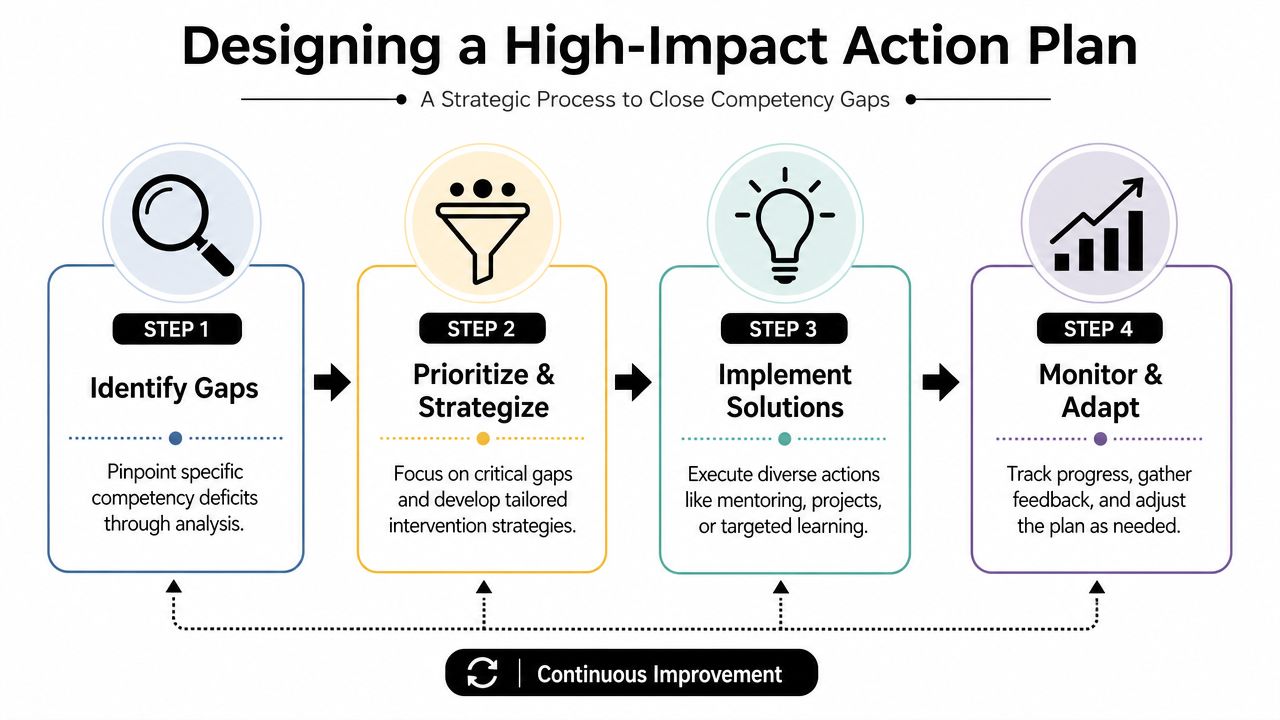
A competency gap analysis starts paying off when it changes who gets developed, who gets hired, who gets moved, and where leaders spend budget. If the output is a broad learning plan for everyone, the analysis was too shallow or the decisions were too soft.
Good action plans rank gaps by business risk, role criticality, and speed to close. They also separate technical shortfalls from behavioral patterns, because those require different interventions and carry different failure costs. I have seen organizations treat both the same way, assign a course to everyone, and then act surprised when the technical issue improves but the leadership failure repeats.
Match the intervention to the gap
The intervention has to fit the gap and the timeline.
A hard skill gap, such as forecasting, regulatory knowledge, or system fluency, often responds to structured learning, practice, and clear proficiency checks. A behavioral gap, such as poor judgment under pressure, weak coaching, or low adaptability, usually takes manager observation, repeated feedback, and role exposure in real situations. Leadership derailers rarely improve through content alone.
Use a wider set of levers:
That last point gets missed often. If three people fail in the same role for the same behavioral reasons, the hiring profile may be wrong, the role may ask for conflicting strengths, or the manager may be rewarding the wrong behavior.
Turn priorities into execution
Action plans fail in execution, not in PowerPoint. Every priority gap needs an owner, a deadline, a defined intervention, and a clear test for whether the gap narrowed.
Use planning language that leaves little room for interpretation:
| Gap | Action | Owner | Timeline | Measurable outcome | |---|---|---|---|---| | Executive Communication | Monthly executive review practice with feedback | Department leader | 6 months | Presents a concise decision memo and verbal recommendation in leadership review | | Coaching Others | Manager coaching program plus observed 1:1s | HRBP and manager | 1 quarter | Demonstrates structured coaching in recurring team conversations | | Regulatory Knowledge | Role-specific certification and case review | Functional lead | 1 quarter | Passes required assessment and applies standards in live work |
Simple structure wins here.
> Decision rule: If no one owns the gap, the business is choosing to keep the risk.
Make trade-offs explicit
Strong plans force choices. Some gaps should be closed through development. Some should be handled through hiring. Some call for reassignment before the wrong person becomes a costly promotion mistake.
The combined technical and behavioral view holds paramount importance. A high-potential engineer with a moderate architecture gap may be worth developing. A manager who hits targets but consistently avoids accountability conversations may create broader team damage if promoted, even if their technical profile looks strong. Treating those cases as equivalent leads to mis-hires, failed successions, and preventable leadership churn.
For teams tying gap closure to headcount, succession, and future capability demand, this guide to [strategic workforce planning](https://synopsix.ai/blog/strategic-workforce-planning) helps connect development actions to larger talent decisions instead of running them as isolated HR tasks.
For HR leaders shaping learning investments, this article on [understanding CPE credit and lead generation](https://www.cloudpresent.co/blog/what-is-cpe-credit) offers a useful commercial lens on how education initiatives create value beyond attendance metrics.
Use modern tools where judgment needs support
Spreadsheets can handle a small analysis. They break down fast once you are tracking proficiency by role, level, readiness, business unit, and time to close.
Modern talent platforms and skills systems help teams map actions to specific competency gaps, flag repeated patterns, and show whether interventions are changing demonstrated capability over time. The technology does not replace judgment. It improves speed, consistency, and follow-through, especially when the plan needs input from HR, line leaders, and functional experts at the same time.
The standard for a high-impact action plan is straightforward. It should tell the business what to do, who will do it, how long it should take, and what evidence will show the risk is lower.
Measuring Success and Avoiding Common Pitfalls
A competency gap analysis isn't complete when the presentation deck is done. It's complete when leaders can see whether capability changed and whether the business benefited.
That requires a feedback loop. Reassess the targeted competencies, review movement against the required proficiency level, and connect progress to operating outcomes your business already tracks. Productivity, promotion quality, retention in critical roles, manager effectiveness, internal fill confidence. If those indicators don't move, the intervention probably wasn't the right one.
What to measure and what to challenge
One assumption causes a lot of wasted work. Teams think that once gaps are identified and learning is assigned, the system will improve on its own. It won't.
Post-training assessment matters. Practical evaluation before and after development increases successful competency closure compared with programs that skip validation, as noted earlier. The point isn't to prove that training happened. It's to verify that performance changed.
Useful review questions include:
Common failures that derail the process
Most broken competency gap analysis efforts fail in familiar ways.
For HR leaders refining the development side of this work, a practical [guide for HR leaders on training](https://www.hubengage.com/employee-training/create-training-program-for-employees/) can help translate identified gaps into stronger employee learning programs.
The urgency isn't theoretical. By 2025, technological change is projected to eliminate 85 million jobs while creating 97 million new jobs, which makes identifying specific skill discrepancies essential for workforce adaptation, according to [this projection reference](https://www.youtube.com/watch?v=gpd7DLGmH_U). In that environment, waiting for capability problems to show up in performance reviews is too late.
Competency gap analysis works when it's continuous, evidence-based, and broad enough to include behavior, not just technical skill. That's how you move from reactive talent management to smarter people decisions.
---
If you want a more predictive way to assess talent, compare people against role demands, and turn behavioral insight into practical hiring and development action, explore [Synopsix](https://synopsix.ai). It helps teams move from assessment data to clear people decisions without forcing leaders to interpret technical psychometric jargon on their own.