Top 10 Executive Coaching Assessment Tools Compared for 2026
By Synopsix · November 24, 2026 · 21 min read
Most executive coaches inherit one favorite assessment during certification and hand it to every client they meet. That habit creates expensive blind spots. A developmental coaching conversation, a C-suite succession call, an external hiring check, and a leadership team redesign each demand different evidence.
The coaching field is far too mature to run on one-size-fits-all psychometrics. The [2025 International Coaching Federation Global Coaching Study](https://coachingfederation.org/wp-content/uploads/2025/09/icf-res-2025-global-coaching-study-executive-summary.pdf), drawing on 10,035 valid responses across 127 countries, estimated 122,974 coach practitioners globally and $5.340 billion in annual global revenue, up 17% from the prior study. Yet executive work stays heavily concentrated among veterans: only 18% of coaches with less than a year of experience primarily serve executives, compared with 38% of those with more than ten years in practice.
> Pick the decision first, then choose the instrument. If you pick the instrument first, you'll force a hiring or succession call through a tool built strictly for reflection.
Sometimes the right next step isn't another personality inventory at all. A technical VP struggling to command boardrooms may get faster mileage from targeted communication work, such as [online accent training for tech leads](https://intonetic.com/best-accent-reduction-coach-in-chico-heres-why-intonetic-is-the-top-choice/), than from re-measuring stable traits. When you do need psychometric or behavioral evidence, the ten executive coaching assessment tools below are sorted by the exact talent decision each one supports, along with what each tool cannot tell you.
1. Synopsix
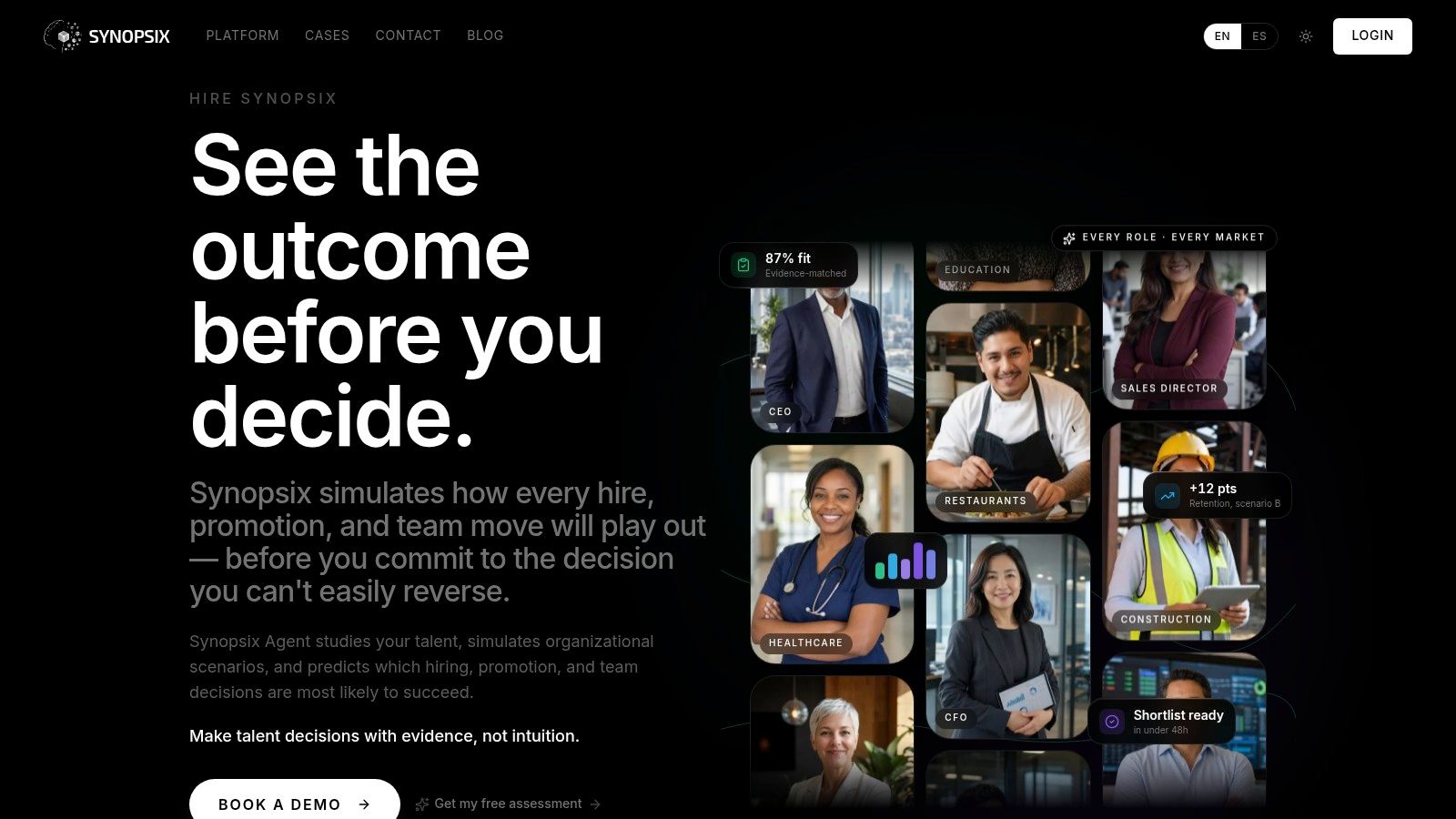
A static personality report answers a narrow question: what is this person generally like? A hiring check, a succession call, a coaching conversation and a team redesign each need a sharper target. [Synopsix](https://cdnimg.co/db2d34d1-2b5f-4f0e-a463-844eabf277bf/screenshots/1c42c345-ac8a-4c04-b013-3432c5f0064c/executive-coaching-assessment-tools-talent-software.jpg) evaluates each person against the role, team, leader and culture, rather than grading them against a generic profile. That role-based fit is the practical value for leaders who need to decide what to do next. The platform covers roles from C-suite executives such as CEO, CFO and CHRO, through directors and team managers, down to frontline roles.
Synopsix Core runs assessments, simulations, workflows and Human Interlink together. That matters because an assessment is only useful when the result connects to an action. The free personal professional assessment takes about 10 minutes, shows traits, leadership style and professional fit, and includes a full downloadable PDF report. It is private and confidential. The free-text and structured answers are analyzed to create a Synopsix profile covering behavioral traits, EQ indicators and leadership signals.
How Predictive Simulation Changes the Selection Question
Traditional assessments describe patterns from earlier behavior. Synopsix uses AI personality and competency assessments to model how someone may operate inside a specific future role. The key shift is from "Does this profile look strong?" to "Does this person fit this role, team, leader and culture?" That is a better question for executive selection, but it still requires human judgment at the debrief and decision table.
Multi-participant simulations test a hire, promotion or reorganization before it happens in real life. That gives leaders a way to examine friction, conflict and change reactions without making the appointment first. In internal mobility analysis, Synopsix identifies high-potential employees, recommends individual and team coaching, and simulates how each person would react to change. Leadership and succession analysis models succession scenarios, simulates conflicts and detects dysfunctional-leadership risk. Simulation does not remove politics, power dynamics or weak sponsorship. It makes those issues easier to see before a costly decision locks in.
Each full analysis bundles eight reports: Seven Key Traits, Executive Summary, Behavioral Profile, Leadership Fit, Succession & Growth, Professional Profile, Extended Profile and Interaction Style. These are executive reports written in plain business language, backed by the same evidence as a financial decision. That format helps because leaders rarely have time to translate psychometric wording into operating choices. The reports are meant to support a decision, not to become the decision itself.
Selection and hiring analysis evaluates a candidate against the role, team, leader and culture, predicts integration risk and proposes questions for the final interview. This helps the tool earn its place in a hiring check. It gives the interview panel better questions to test the risks already surfaced. It cannot prove that a candidate will perform, and it should not replace structured interviews, references or accountable judgment.
The suite also connects assessment to daily work. Synopsix provides coaching tips and micro-learning to users when that feature is enabled. Intelligence is a project workspace for running, managing and sharing AI-driven analyses, with results dashboards the whole team can read. Workflows is a visual editor for automating talent processes, with AI decisions, approvals and webhooks into existing tools. Screen uses knock-out questions on your own job board and runs in five steps: define the vacancy, publish it on your own job board, have AI rank every applicant, run full analysis only on finalists, and close with an AI Decision. SYN-X Agent is a single AI chat that launches reports, coaching or simulations from plain-language requests.
Customer comments point to two practical uses. Juan C. said, "The biggest benefit is being able to identify the behaviors and competencies of our high-performance team, which become our reference for hiring future talent with a high probability of an excellent fit with the organization and its company DNA." Pedro G. said, "Synopsix is an assessment tool to help companies validate their hiring decision." Wolf C. said, "Synopsix is so much more than a talent acquisition gadget! It supports not only candidate sourcing and selection, but also enables organizational design by mapping roles, teams, and reporting structures."
Governance, Limits, and What to Validate
AI-based leadership evaluation needs clear governance. [Psychometrics.ai on AI testing standards](https://psychometrics.ai/testing-standards) emphasizes that AI does not replace foundational reliability and validity requirements, and it adds scrutiny around training-data provenance, score derivation, subgroup fairness, GDPR, the EU AI Act and US automated employment rules. Synopsix's automated processing creates scores and narratives for each user's personal report, and this information is shared with the user and their employer. Explanations of the key factors behind a user's results are available from Synopsix on request. Those mechanics should be explained to candidates and employees before assessment, not after a disputed decision.
The trade-off is speed versus proof. Synopsix reports measurable vendor figures: 40% faster hiring decisions, 60% fewer mis-hires, over 50,000 profiles generated, and claimed 98% assessment accuracy. Treat those as vendor-reported benchmarks to verify in a pilot, especially before using automated outputs for high-stakes employment calls. Enterprise pricing is not publicly listed. Run a role-specific validation check, define who sees the report, and decide in advance how much weight the scores will carry. Used well, Synopsix supports hiring, internal mobility, team design and succession with evidence that leaders can act on. Used carelessly, it turns a fit signal into an unchallenged verdict.
2. Hogan Leadership Forecast Series
Picture a newly promoted division president whose decisiveness won praise as a VP, yet turns into micromanagement and sharp defensiveness during a missed quarter. That shift under pressure is exactly where the [Hogan Leadership Forecast Series](https://www.hoganassessments.com/products/leadership-forecast-series/) earns its reputation in executive coaching and succession reviews.
Hogan's executive suite separates everyday reputation from stress-induced derailers and underlying drivers.
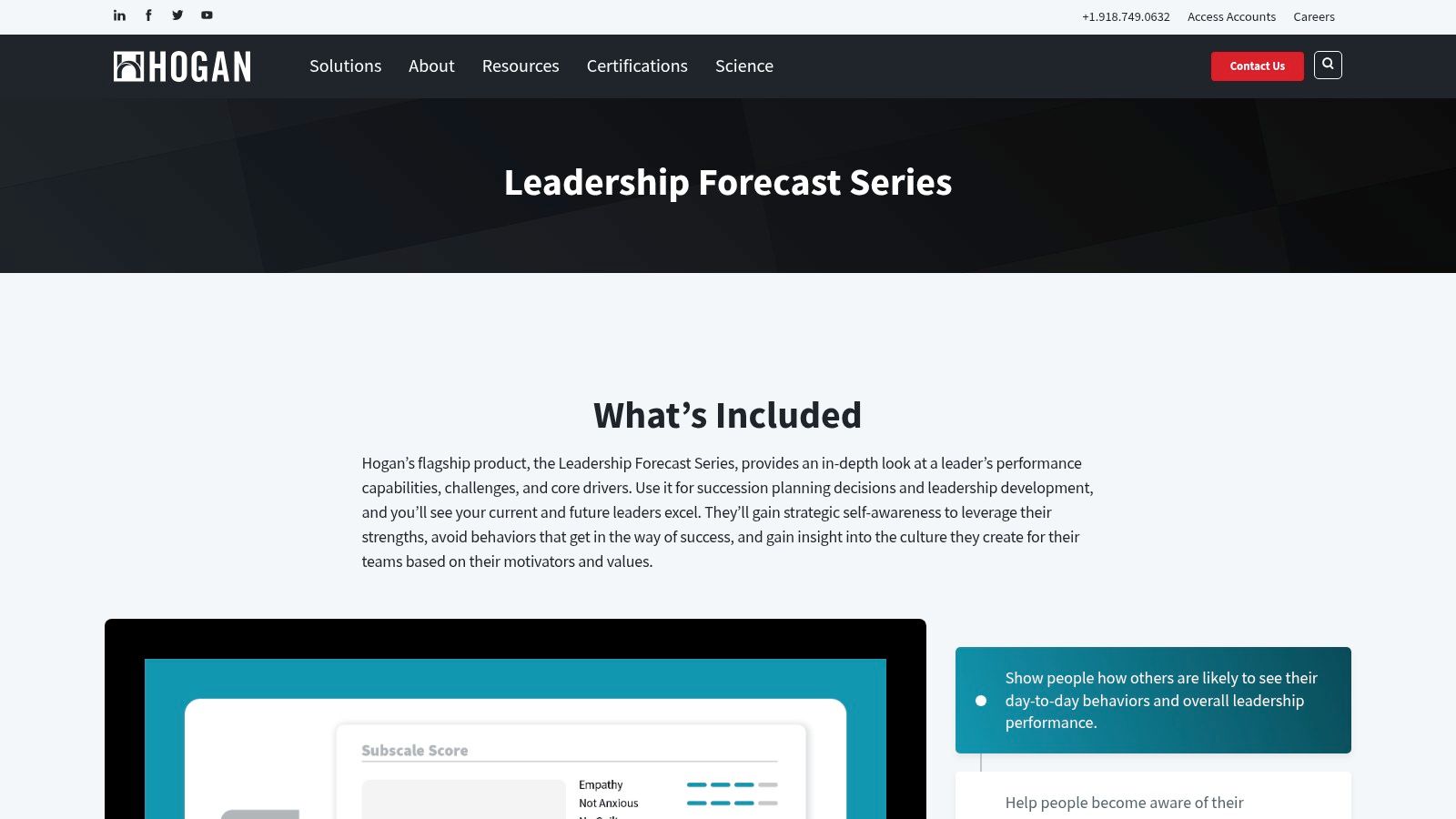
Rather than stopping at everyday strengths, Hogan evaluates three distinct layers: bright-side behavior (how a leader typically shows up), potential derailers that surface when stress rises or self-monitoring drops, and core motives and values that shape the culture the leader builds. A dedicated coaching report turns those behavioral risk indicators into structured development priorities for coaching, leadership-pipeline reviews, and succession discussions.
Strong psychometric data still depends on skilled human debriefing. The [ICF Global Coaching Study research hub](https://coachingfederation.org/resources/research/global-coaching-study/) reports that 99% of professional coach practitioners in the 2025 study completed coach-specific training (alongside 93% of managers and leaders using coaching skills), while the 2023 study found 31% of practitioners primarily served managers and 25% served executives. Hogan's reports reflect that reality: they aren't a self-service intervention, and handing raw derailer scores to an untrained stakeholder can trigger defensiveness instead of insight.
3. CCL Benchmarks® for Executives™
A senior leader can believe they communicate clearly while the leadership team feels blindsided every month. [CCL Benchmarks for Executives](https://shop.ccl.org/usa/benchmarks-for-executives.html) fits that development conversation because it puts weight on how senior stakeholders experience the leader, not only on self-description.
Developed by the Center for Creative Leadership, the instrument measures 16 executive leadership competencies and benchmarks multi-rater feedback against a norm group of senior executives. That comparison changes the coaching question. The issue is less “Does this leader see themselves positively?” and more “Where does their behavior differ from the expectations of peers operating at a similar level?”
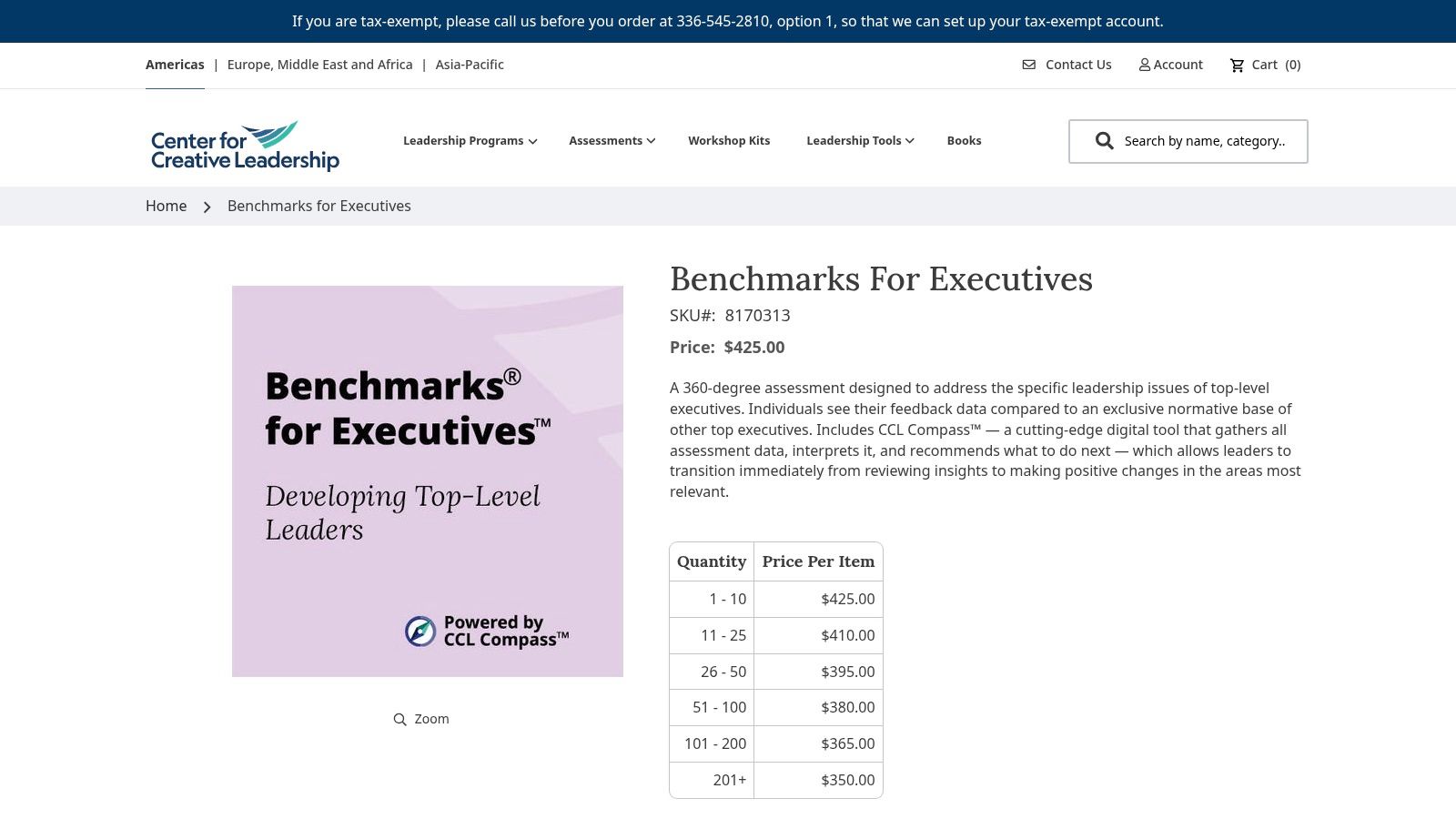
For a development conversation, the written rater comments matter as much as the scores. They give a coach concrete language for what stakeholders see, which helps avoid a debate about intentions. Access to CCL Compass supports goal setting and ongoing development planning. Public US pricing and volume tiers also make budgeting easier than quote-only enterprise suites. [Launch 360's guide to executive coaching assessment tools](https://launch-360.com/the-complete-guide-to-executive-coaching-assessment-tools/) places CCL among the assessment tools used in executive coaching contexts.
> Measurement rule: Judge coaching outcomes with multi-rater or behavioral measures, not self-report gains alone. Self-ratings can move because a leader understands the feedback better, while peers and direct reports may still see the same operating habits.
The trade-off is scope. CCL releases scored feedback only to certified or qualified facilitators, and the listed assessment fee excludes facilitator certification and the coaching debrief itself. The tool focuses on observable competencies and leadership behaviors, so it will not diagnose personality traits, stress derailers, or motivational drivers on its own. Use it for a leadership decision that needs stakeholder evidence, then add another instrument when the coaching question moves into personality, pressure behavior, or motivation.
4. The Leadership Circle Profile® (LCP)
Most 360-degree surveys tell a leader what colleagues see, then leave the coach guessing why the pattern persists. [The Leadership Circle Profile (LCP)](https://leadershipcircle.com/leadership-assessment-tools/leadership-circle-profile/) bridges that gap by mapping observable creative leadership competencies alongside the reactive tendencies and internal assumptions that limit effectiveness.
Its circular visual profile gives coaches and senior clients an immediate diagnostic map benchmarked against a global norm base.
In a real engagement, that visual layout accelerates insight. A leader who scores low on delegating often sees a matching spike in reactive controlling or perfectionist habits right across the wheel. Knowing how to walk an executive through a complex [leadership assessment report](https://synopsix.ai/blog/leadership-assessment-report) without overwhelming them makes the difference between a defensive debrief and a genuine mindset shift. The provider also offers a manager-focused edition and a free self-assessment introduction for early exploration.
Where LCP Works and Where It Stops
I recommend LCP for high-trust, longitudinal executive coaching where a leader is ready to examine mindset, not just check competency boxes. Before adopting it, make sure your governance boundaries match the publisher's rules:
5. EQ-i 2.0® Leadership Report / EQ 360®
I don't reach for an emotional intelligence inventory when a board asks whether a COO can run an operational turnaround. I reach for it when a technically brilliant executive struggles with impulse control, stakeholder empathy, or executive presence under pressure. MHS's [EQ-i 2.0 Leadership Report and EQ 360](https://mhs.com/eq-i-2-0/) target that interpersonal layer directly.
The core online self-assessment takes roughly 15 to 20 minutes and breaks emotional intelligence into five composite areas and 15 subscales, translating them into leadership-relevant dimensions.
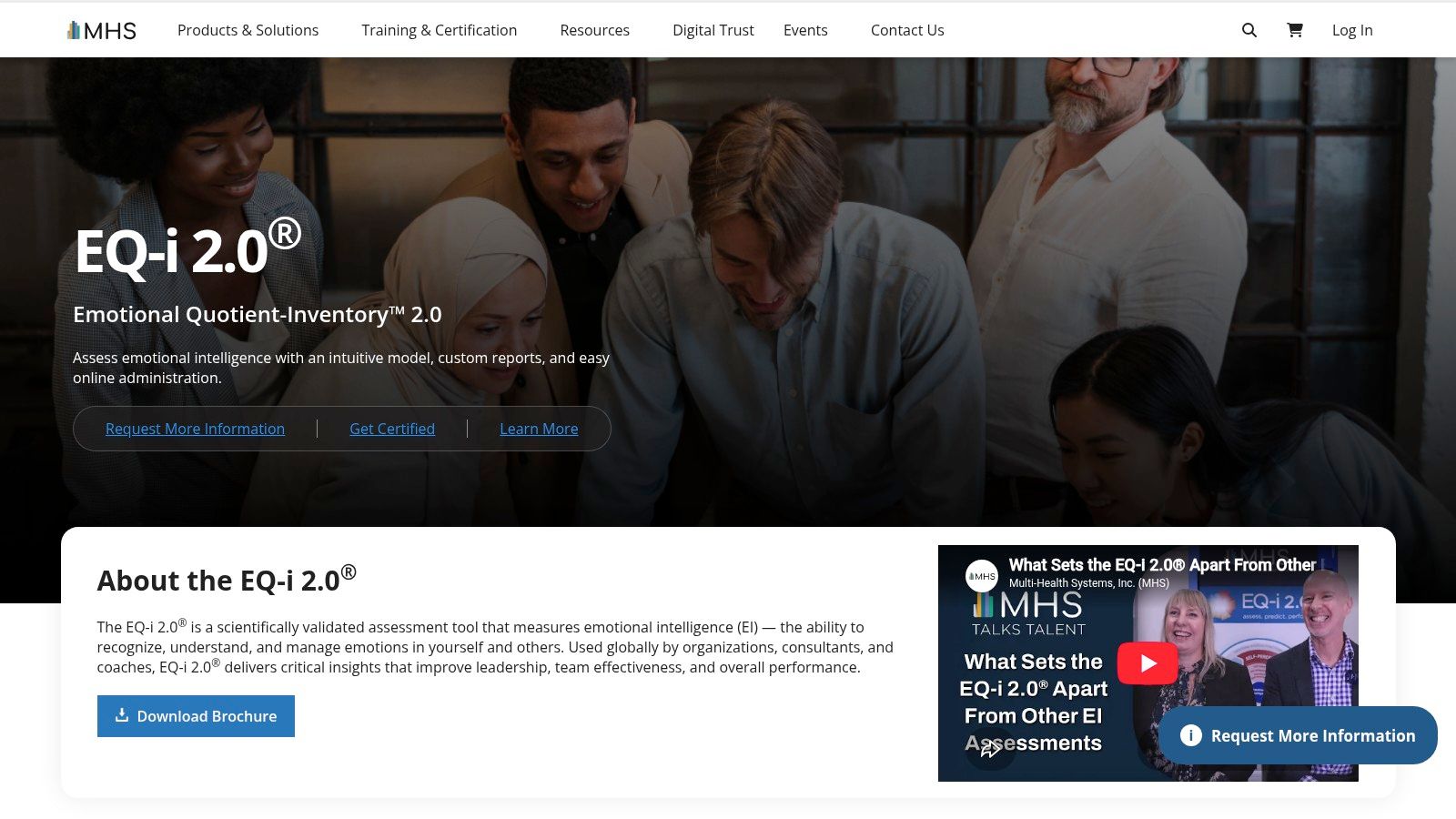
On its own, the self-report gives you a sharp conversation starter around stress tolerance, assertiveness, and decision-making balance. Adding the EQ 360 option is where coaching value emerges, because it exposes blind spots between how emotionally agile a leader thinks they are and how direct reports experience them. Coaches grounding clients in the [four components of emotional intelligence](https://synopsix.ai/blog/four-components-of-emotional-intelligence) will find the subscale structure easy to link to specific daily habits, and MHS backs practitioners with certification, group reporting, and support materials.
6. Korn Ferry 360
Large enterprises rarely struggle to find a single good coaching survey. They struggle because hiring uses one competency model, high-potential reviews use another, and external coaches bring three more. With [Market Research Future](https://www.marketresearchfuture.com/reports/executive-coaching-leadership-development-market-42533) valuing the executive coaching and leadership-development market at $17.64 billion in 2024, CHROs are under real pressure to keep leadership data unified across programs.
[Korn Ferry 360](https://www.kornferry.com/capabilities/talent-suite/korn-ferry-assess/leadership-tools) fits organizations that want multi-rater executive feedback tied directly to an enterprise-wide talent framework.
The instrument gathers input from managers, peers, and direct reports to pinpoint strengths and development gaps, then links those findings into Korn Ferry's broader competency architecture. Because it sits inside a larger assessment suite, HR teams can connect multi-rater feedback with companion tools measuring leadership potential, learning agility, leadership styles, and emotional and social competencies. For teams structuring an enterprise [360 assessment for leadership](https://synopsix.ai/blog/360-assessment-for-leadership), that shared vocabulary keeps coaching goals aligned with succession and workforce-planning criteria.
> Enterprise integration always trades away agility. Independent coaches or mid-sized teams often find Korn Ferry's contracting overhead heavier than they need for a two-person engagement.
Public per-person pricing isn't generally listed, and deployment typically requires an organizational contract or a qualified practitioner. Before committing, buyers should clarify exact report configurations, norm groups, and facilitator certification requirements so rollouts don't stall halfway through a cohort.
7. The Birkman Method®
Say a senior engineering director appears detached and curt during cross-functional planning meetings. A standard behavior tool labels them "low sociability" and advises them to speak up more. [The Birkman Method](https://birkman.com/coaches) digs deeper by asking what workplace conditions that leader needs in order to function well, and what happens when those needs go unmet.
Birkman evaluates four distinct dimensions: interests, usual behavior, interpersonal needs, and stress behavior.
That needs-versus-stress distinction makes Birkman unusually strong for team design, executive onboarding, and resolving recurring communication friction. Two executives can display similar outward habits while needing completely different levels of structure, directness, or autonomy from peers. Surfacing those hidden expectations gives coaches concrete levers for redesigning how a leadership team communicates rather than blaming personality clashes.
Practical Trade-Offs for Coaches
Because Birkman operates on nuanced interactions between usual style and underlying needs, untrained reading leads straight to misinterpretation. Practitioner training and certification are necessary if you plan to debrief executives or facilitate intact leadership teams well.
Just remember what Birkman leaves out. It's a self-report behavioral and occupational instrument, not a 360-degree feedback tool, so it won't verify whether colleagues witness the behaviors a leader reports. Pricing and access also depend on the specific report tier, certified practitioner, and coaching package rather than a flat off-the-shelf rate.
8. Saville Wave Leadership Impact
Generic leadership profiles often praise traits that have nothing to do with the business mandate sitting on a new executive's desk. [Saville Wave Leadership Impact](https://www.savilleassessment.com/leadership-assessment) flips that sequence by letting an organization profile the specific impact a role requires first, then evaluating how a leader's behavior aligns with those job and business outcomes.
According to Saville, the online questionnaire takes about 35 minutes and can generate both Leadership Impact and Leadership Risk reports from a single completion.
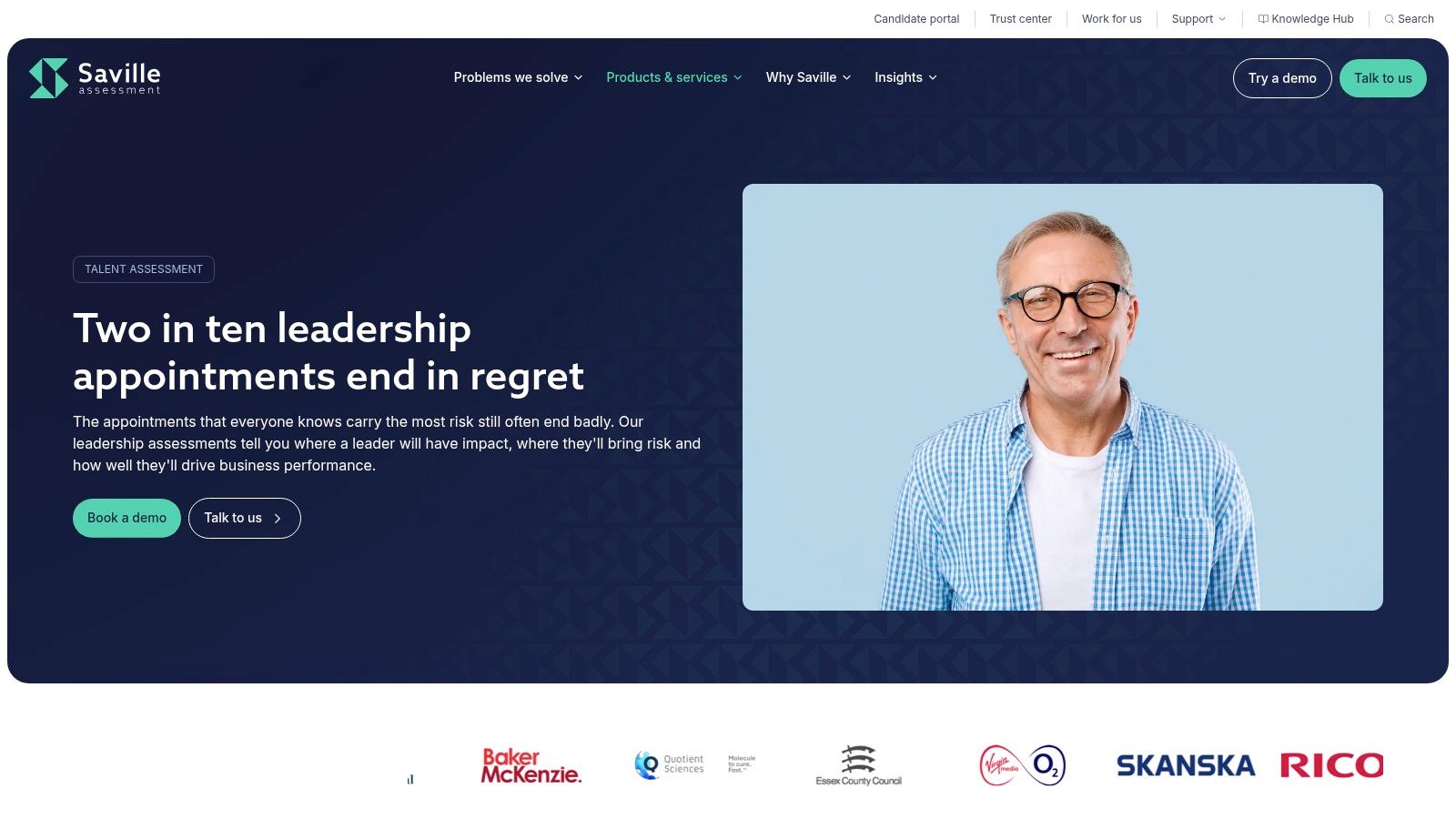
That single-sitting efficiency matters when assessing time-strapped executives for promotions, succession calls, or role-specific coaching. Saville's wider leadership suite can also cover potential and 360-degree feedback, and reports explicitly explain what was measured and why, which helps HR leaders defend recommendations in talent-review rooms. Pairing impact alignment with pressure-related leadership risks ensures you see both upside and potential failure modes before moving someone into a larger remit.
9. CliftonStrengths®
Coaching has expanded well beyond the C-suite into middle management and emerging-leader cohorts. Figures attributed to the International Coaching Federation Global Coaching Study and reported by [Stratos Coaching](https://stratoscoaching.com/executive-coaching-statistics.html) put the global profession at 109,200 coach practitioners in 2023, and many of those practitioners need an approachable entry point that builds momentum fast.
Gallup's [CliftonStrengths](https://www.gallup.com/cliftonstrengths/en/253868/cliftonstrengths-assessment.aspx) ranks recurring natural talent themes, available either as a Top 5 snapshot or the full CliftonStrengths 34 profile.
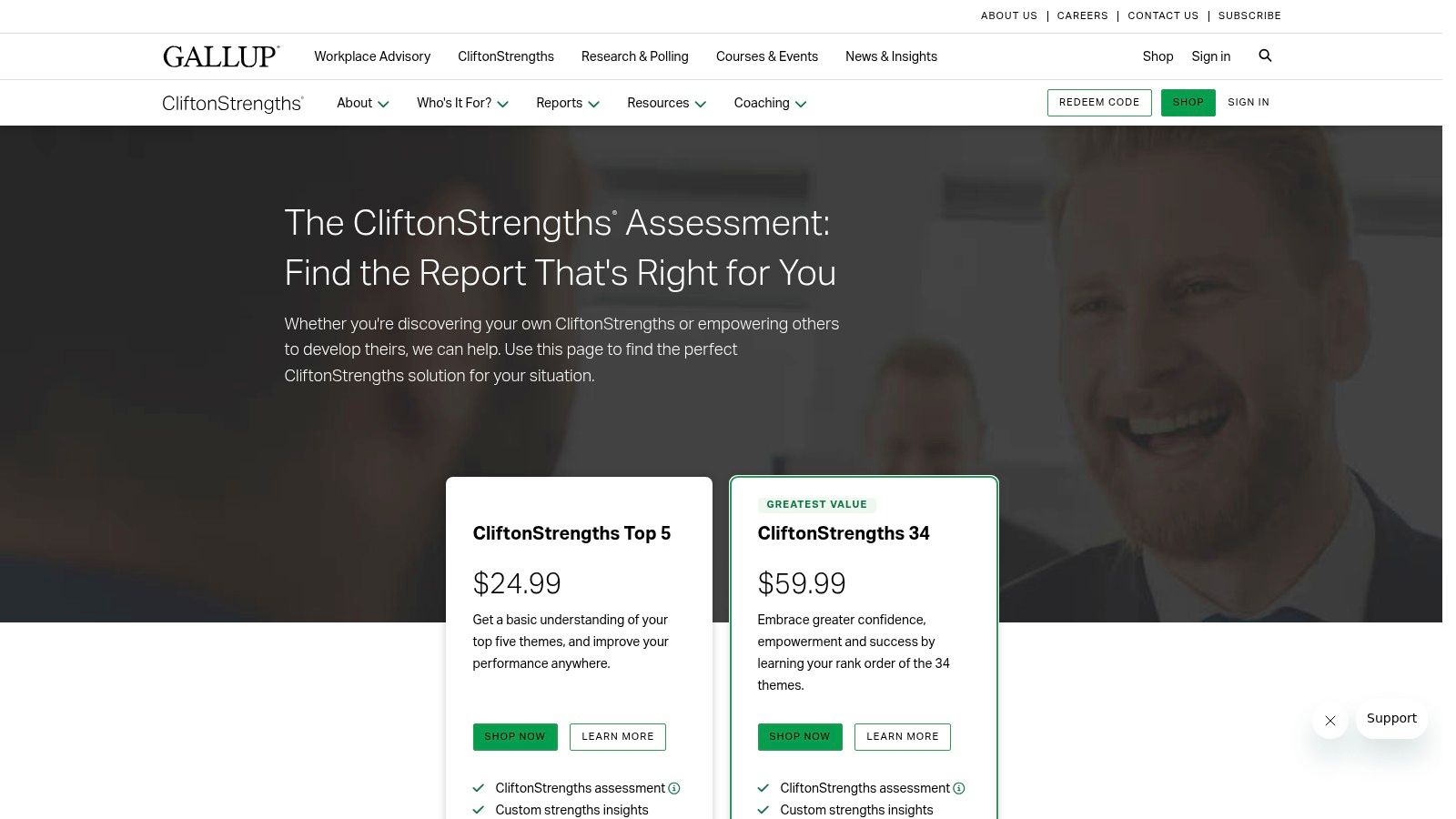
Gallup also provides dedicated leader and manager reports packed with theme insights, reflection questions, and concrete action items, making the output far more role-relevant than a bare theme ranking. Public individual pricing removes procurement friction, so coaches can pilot it with a single executive or an entire management cohort without waiting on enterprise contracts, and Gallup offers formal strengths-coach certification for deeper practice.
> Coaching caveat: CliftonStrengths spotlights what a leader naturally leans toward, not where they derail under stress or how direct reports actually experience them. Never use it as a standalone hiring screen or succession veto.
Its real ceiling is translation. Without a coach turning abstract talent themes into observable weekly behaviors and measurable goals, clients memorize five flattering labels and change almost nothing about how they run meetings or delegate work.
10. Everything DiSC® Work of Leaders
When an executive needs a fast, memorable structure for leading change across a department, complex 40-page psychometric reports often stall the conversation. [Everything DiSC Work of Leaders](https://www.discprofile.com/products/work-of-leaders) pairs a behavioral style profile with a three-part leadership model built around Vision, Alignment, and Execution.
The online self-assessment takes roughly 15 to 20 minutes and outputs a 23-page leadership profile linking personal style directly to everyday leadership moments.
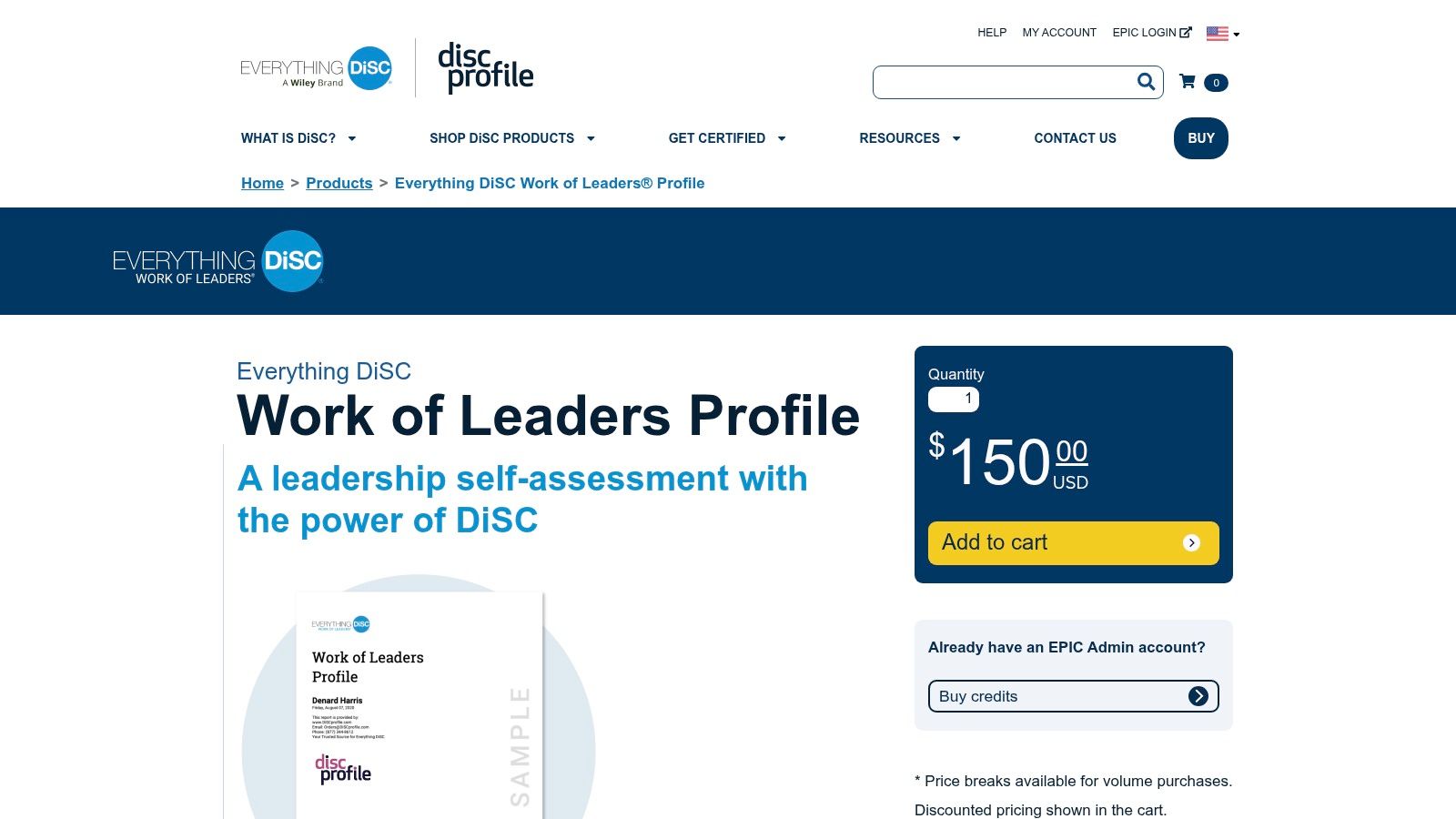
Participants get access to MyEverythingDiSC, and facilitators can pair individual coaching with a structured facilitation kit for leadership cohorts. Public individual pricing makes it straightforward to pilot, and teams already exploring [DISC profiling for leadership development](https://onedteambuilding.com/using-disc-profiling-for-leadership-development-and-management-training/) appreciate how quickly executives grasp where their natural tendencies help or hinder setting direction, building buy-in, and driving follow-through.
How the Executive Coaching Assessment Tools Differ at a Glance
Choose by the decision the assessment supports. A development conversation, succession call, hiring check, and team-design exercise need different evidence. The table separates assessment focus, feedback format, and purchasing arrangements without treating them as interchangeable measures of quality.
| Item | Assessment focus | Multi-rater 360° feedback | Best for | Public pricing | |---|---|---|---|---| | Synopsix (recommended) | Role-specific personality, competencies, and team dynamics | Uses free-text and structured assessment answers | Hiring checks, promotion, succession, and team design | Free professional assessment | | Hogan Leadership Forecast Series | Strengths, derailers, values, and motivators | No | Development conversations and succession | Not published; provider- and report-dependent | | CCL Benchmarks® for Executives™ | Leadership competencies, executive norms, and written comments | Yes | Senior executive development and feedback | Public US pricing and volume tiers | | The Leadership Circle Profile® (LCP) | Leadership competencies and reactive patterns | Yes | Development conversations and coaching | Quote-based | | EQ-i 2.0® Leadership Report / EQ 360® | Emotional intelligence and leadership dimensions | With EQ 360 option | Self-awareness, relationship, and communication coaching | Qualification- and report-dependent | | Korn Ferry 360 | Leadership effectiveness and development areas | Yes | Enterprise leadership development | Per-person pricing not generally published | | The Birkman Method® | Interests, behavior, needs, and stress responses | No | Individual coaching and team development | Report-, practitioner-, and package-dependent | | Saville Wave Leadership Impact | Leadership impact, risk, potential, and role requirements | Available | Role-specific coaching, promotion, and succession | Not published on leadership page | | CliftonStrengths® | Talent themes and strengths-based development | No | Strengths-based leadership and manager coaching | Public individual pricing | | Everything DiSC® Work of Leaders | Behavioral style across Vision, Alignment, and Execution | No | Structured leadership development | Public individual pricing |
The practical boundary is what each format captures. Multi-rater feedback adds others' perceptions; self-assessment does not supply that perspective. Strengths and style tools support development conversations but cannot substitute for a role-specific hiring check.
Synopsix changes the selection question toward fit with a particular role, team, leader, and culture. Its simulations test potential hires, promotions, or reorganizations before implementation. Those outputs anticipate integration risks and team friction; they do not document behavior already observed at work.
Turning Assessment Scores into Better Leadership Decisions
With [Dojo Business](https://dojobusiness.com/blogs/news/executive-coaching-industry-statistics) estimating the global executive coaching market at $94–103 billion in 2024, organizations spend heavily on leadership development while still picking tools backward. Many organizations pick a recognizable brand first and hope it answers whatever talent question lands on the CHRO's desk next. Reverse that order: define the decision first, then verify that your instrument is legally and psychometrically built for those stakes.
Match the Instrument to the Stakes
A confidential developmental debrief and a high-stakes promotion decision don't share the same rules. Before reusing coaching data for succession, compensation, hiring, or termination, establish explicit purpose limitation, informed consent, documented human review, subgroup fairness checks, and an auditable explanation for every recommendation. Never repurpose a development-only 360 as a surprise performance appraisal, because once executives suspect confidentiality is porous, honest coaching stops overnight.
Multi-rater tools also create a practical dilemma most guides ignore: what happens when self-ratings, peer ratings, and manager ratings contradict each other? Treat those gaps as data, not scoring errors. Compare rater patterns against observable business indicators, refine your feedback prompts using strong [sample 360 feedback questions](https://www.myculture.ai/blog/360-assessment-questions), and establish a clear reassessment window tied to behavioral milestones so you can separate real leadership growth from short-term enthusiasm or a change in team conditions.
Run a Pilot Before You Sign an Enterprise Contract
No vendor brochure proves how an assessment will perform inside your culture. Before signing an annual agreement, ask every provider for documented construct definitions, reliability and validity evidence, role-relevant norm groups, qualification requirements, and clear rules on data sharing. Treat every accuracy or ROI claim as a hypothesis you'll test on real leaders.
Here's a practical four-step buying check before committing budget:
---
If you want to connect executive coaching with evidence-based hiring, succession planning, and team design without wading through psychometric jargon, our platform brings role-specific assessments, plain-language executive reports, and predictive team simulations into one workflow. Take our free, confidential 10-minute professional assessment to inspect the depth of our output firsthand, or explore our full suite at [Synopsix](https://synopsix.ai).