8 Psychometric Test Types for Hiring and Development in 2026
By Synopsix · July 20, 2026 · 25 min read
Research on personnel selection has repeatedly found that structured assessment methods predict job performance more reliably than unstructured interviews alone, which is why psychometric testing has moved from specialist use into mainstream hiring and internal mobility. For HR leaders, the shift is not about adding another screening hurdle. It is about replacing guesswork with evidence on how people reason, respond, relate, and perform under realistic conditions.
Psychometrics measures latent constructs such as cognitive ability, personality, judgment, motivation, and interpersonal style. In practice, that means different test types answer different talent questions. Cognitive assessments estimate learning and problem-solving capacity. Personality measures describe likely behavioral patterns. Situational and simulation-based tools show how a person may act when context, trade-offs, and pressure are part of the job. The [LSBA guide to psychometric test categories](https://certificates.lsba.org.uk/guides/3727054/unit-2-types-of-psychometric-tests) outlines these broad formats, but the core value for people analytics teams comes from how they are combined and validated for specific roles.
That is where stronger assessment design starts to matter.
HR teams trying to predict human behavior and make better people decisions rarely get there with a single instrument. They get there by combining scientifically validated test types inside workflows that support screening, structured interviewing, onboarding, team design, promotion planning, and leadership development. Synopsix makes that approach more practical by helping teams connect assessment data to AI-assisted decision workflows, so test results inform action rather than sit in disconnected reports. If your hiring model is also shifting toward demonstrated capability over pedigree, this [skills-based hiring guide](https://hiredbyskill.com/blog/what-is-skills-based-hiring) is a useful companion.
This guide examines eight psychometric test types through that operating lens: what each format measures, where validity is strongest, where misuse creates risk, and how HR teams can integrate them into Synopsix workflows without losing sight of fairness, candidate experience, or job relevance.
1. Personality Assessments (Big Five/OCEAN Model)
Personality assessments accounted for [44.4% of the psychometric testing market in 2022](https://www.transpireinsight.com/report/psychometric-tests-market). That scale reflects a practical HR problem. Selection decisions often fail on behavior at work, not baseline capability alone.
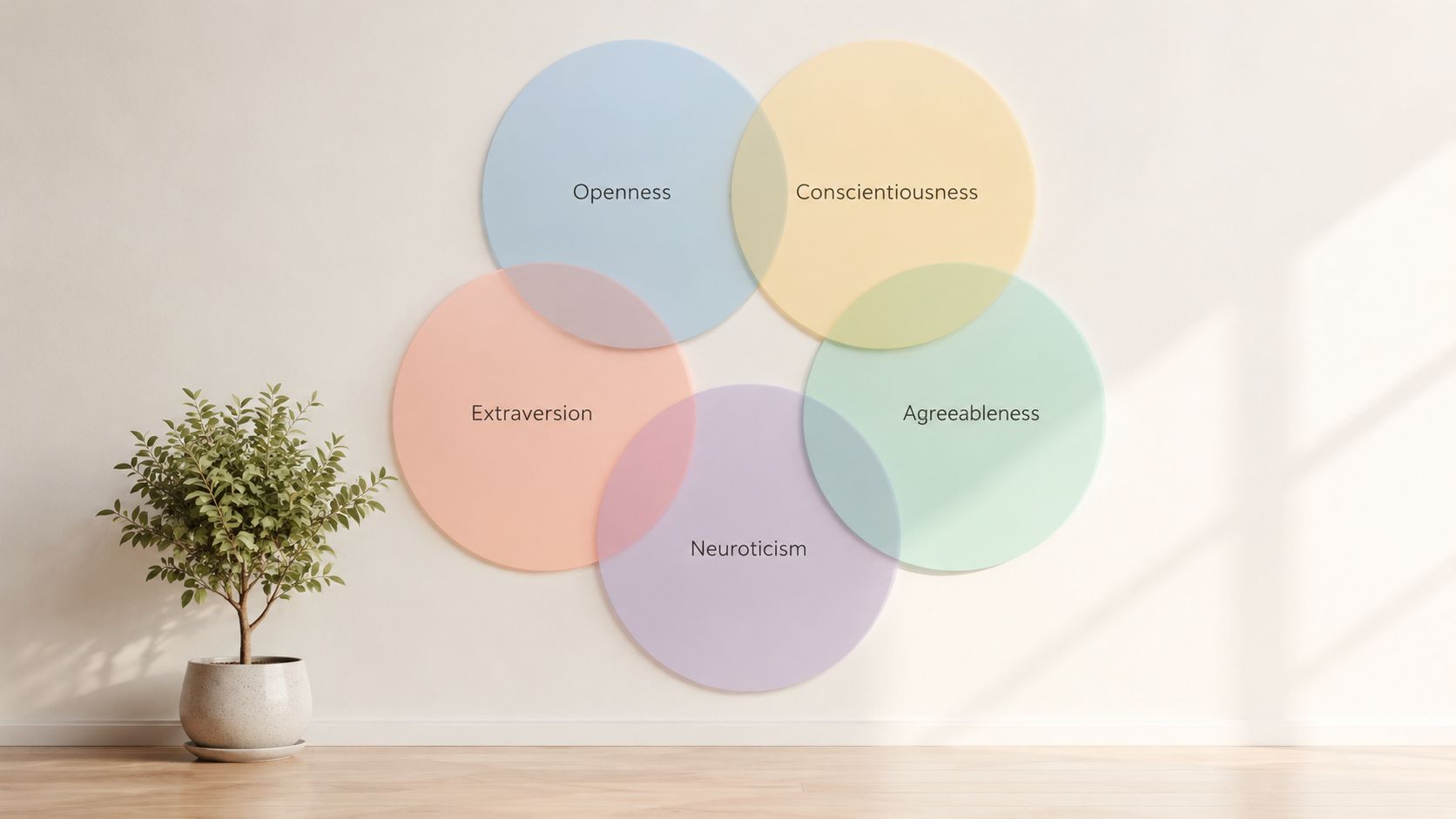
The strongest research base in this category sits with the Five Factor Model, or Big Five. A large body of personality research converges on five broad trait domains: openness, conscientiousness, extraversion, agreeableness, and neuroticism, often reported in workplace settings as emotional stability. The American Psychological Association's [Personality Processes and Individual Differences resources](https://www.apa.org/pubs/journals/psp) and the [Oxford Handbook overview of the Five-Factor Model](https://academic.oup.com/edited-volume/28139/chapter-abstract/212374496) describe why this structure remains the reference point for modern trait assessment. For HR leaders, the implication is operational. Use continuous trait scores tied to job requirements, not broad personality labels that flatten meaningful differences.
What to look for in practice
Personality questionnaires estimate typical patterns of behavior, preferences, and interpersonal style. They do not measure maximum performance. That distinction matters because trait data is strongest when used to forecast consistency, stress response, collaboration style, and follow-through across time.
The quality question is not whether a test mentions OCEAN. It is whether the assessment shows evidence of reliability, construct validity, norming, and job relevance. Vendor choice matters here. Two personality tools can use similar language while producing very different levels of decision quality.
A leadership hiring team, for example, should not treat low extraversion as a disqualifier. The better question is whether the role depends on external persuasion, conflict tolerance, disciplined execution, or steady stakeholder management. Personality data becomes useful when HR teams translate traits into work behaviors, then test those assumptions against structured interviews, performance data, and role context.
> Practical rule: Use personality results to sharpen interview questions, onboarding plans, and manager coaching. Do not use them as a stand-alone pass or fail screen.
For teams building that process into AI-supported hiring and development, Synopsix's guide to the [Five Factor personality test](https://synopsix.ai/blog/five-factor-personality-test) offers a business-facing reference, and its overview of [cognitive ability testing for hiring decisions](https://synopsix.ai/blog/cognitive-ability-test) helps frame where personality should sit relative to ability measures.
Used well, Big Five assessments help HR teams predict patterns of behavior with more precision and less bias than informal interviewer intuition. The gain is not just better hiring. It is smarter people decisions across the full employee lifecycle when trait data is integrated, validated, and interpreted in context.
2. Cognitive Ability Assessments
General mental ability is one of the most consistent predictors of job performance, especially in roles with high information load and frequent problem solving. For HR leaders, that makes cognitive assessment less a screening add-on and more a decision-quality tool. Used well inside Synopsix workflows, it helps teams predict how quickly candidates will learn, how accurately they will reason under pressure, and where ability data should sit alongside personality, job fit, and later-stage behavioral evidence.
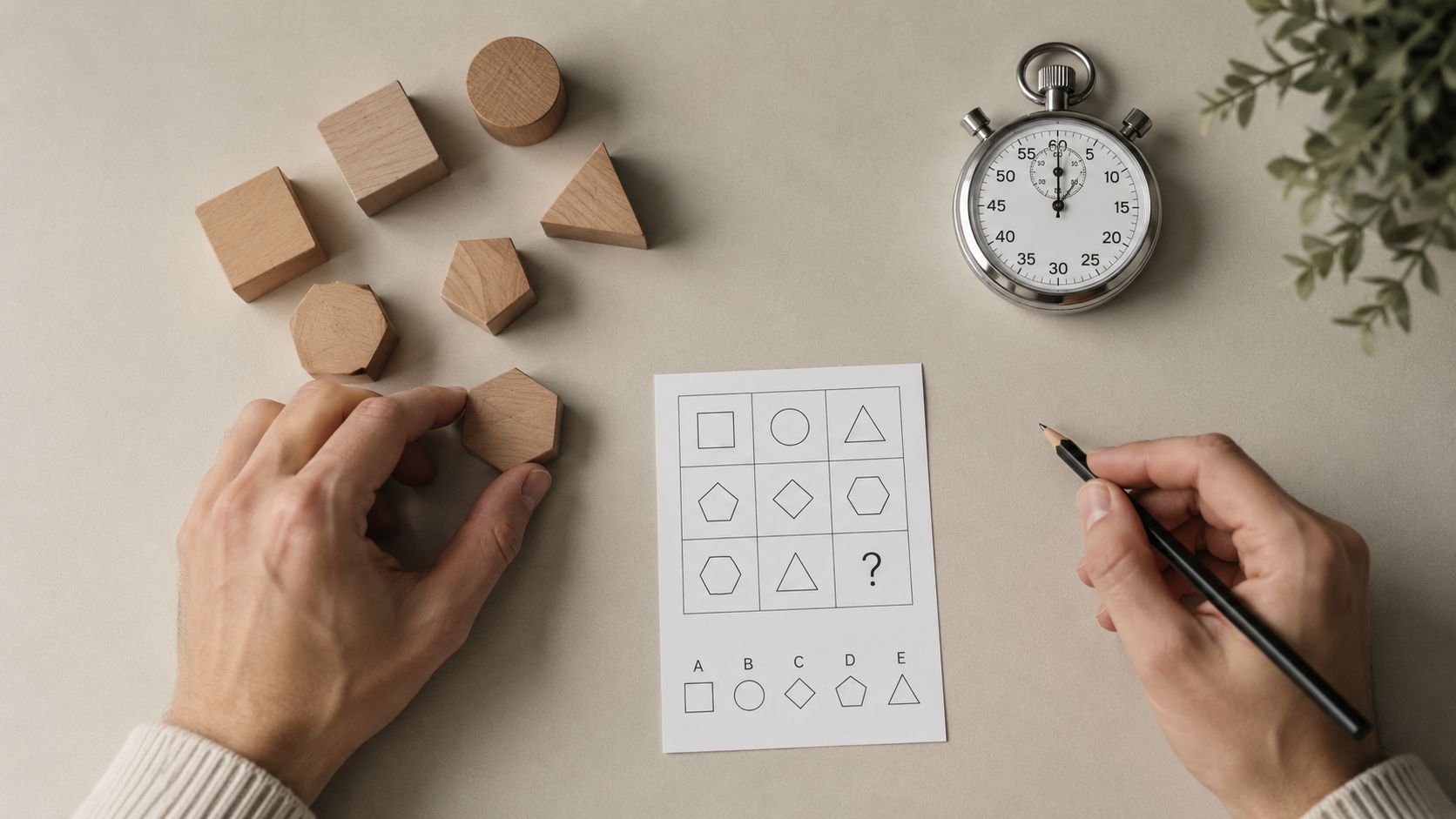
Cognitive tests measure capabilities such as verbal, numerical, abstract, and logical reasoning. The practical distinction from personality assessment is straightforward. Personality estimates typical behavioral tendencies. Cognitive assessment estimates processing capacity and learning speed under standardized conditions. That split matters because two candidates can show similar motivation and interpersonal style while differing sharply in how they absorb new information or solve unfamiliar problems.
A software engineer weighing system architecture tradeoffs, a financial analyst reconciling conflicting indicators, and a clinical operations leader triaging risk all face this kind of demand. Resume depth helps, but it does not reliably show how a person will perform when the work becomes ambiguous, time-bound, and cognitively dense.
Why format and norms matter
Test design changes what a score means. Speed tests emphasize how many simpler items a person can answer within a tight time limit. Power tests emphasize how well a person solves harder items, often with less time pressure. HR teams should choose between them based on the work itself, not vendor habit. A high-volume service role may justify speeded assessment. A strategic planning or technical problem-solving role often benefits from a power-oriented format that captures depth of reasoning more clearly.
Norms matter just as much. A candidate score is only useful relative to a relevant comparison group with enough representation across the target population. If the norm sample is narrow, outdated, or poorly matched to the hiring context, percentile rankings can create false precision. That is one reason cognitive testing should be reviewed like any other measurement system. HR should ask who the norm group included, when it was built, whether it reflects the roles being assessed, and how often the publisher refreshes it.
> Strong cognitive assessment depends on both test quality and comparison quality.
This is also where integration discipline matters. In Synopsix, cognitive results are most valuable when they are combined with structured interviews, work samples, and progression rules that prevent over-weighting a single score. That approach improves prediction while reducing the common failure mode of treating cognitive data as a final verdict instead of one validated input.
A practical sequence is often straightforward. Use cognitive testing early to establish whether a candidate can handle the role's complexity. Follow with job-relevant evidence that shows how that ability is applied in context. Teams hiring engineers, analysts, or first-line leaders often get better signal from this sequence than from unstructured interviews conducted before any standardized assessment.
For teams building ability measures into a broader people analytics workflow, Synopsix explains how to operationalize a [cognitive ability test](https://synopsix.ai/blog/cognitive-ability-test) in hiring and development. It also helps to interpret ability data alongside adjacent capabilities such as self-regulation and social judgment, which matter in later-stage success and can be framed through the [four components of emotional intelligence](https://synopsix.ai/blog/four-components-of-emotional-intelligence).
For HR and people analytics teams, the non-obvious value of cognitive assessment is not just better hiring at the top of the funnel. It is better calibration across the whole workflow. When ability data is tied to role complexity, norm quality, and downstream performance in Synopsix, teams can make smarter people decisions with fewer assumptions and clearer governance.
3. Emotional Intelligence (EI) Assessments
Emotional intelligence assessments sit in an interesting spot among psychometric test types. They're often treated as soft or secondary, but in leadership, people management, and customer-facing work, they often explain why technically strong hires still fail. A manager can reason well and still trigger avoidable conflict. A high-potential executive can spot strategy gaps and still lose trust in the room.
That's why EI assessment belongs in any serious conversation about smarter people decisions. It captures how someone recognizes emotion, regulates their own reactions, responds to others, and sustains working relationships under pressure. Those capabilities show up most clearly when the role includes influence, coaching, conflict navigation, or distributed collaboration.
Where EI becomes decision-critical
Consider three scenarios. A hospital is promoting a clinician into team leadership. A global software company is hiring a country manager who'll need to align cross-functional teams remotely. A PE-backed portfolio company is replacing a founder-led sales director with a more scalable leader. In each case, technical credibility matters, but emotional self-management and relational judgment can make or break performance.
The strongest use of EI data is developmental and comparative, not simplistic. HR leaders should ask whether the role requires conflict mediation, stakeholder empathy, or emotional steadiness in visible situations. Then they should interpret EI results with behavioral evidence from interviews, references, and role simulations.
> Decision lens: High cognitive ability without emotional regulation can create smart but destabilizing leadership.
Synopsix's explanation of the [four components of emotional intelligence](https://synopsix.ai/blog/four-components-of-emotional-intelligence) is useful when you need to translate an abstract EI profile into coaching and hiring language.
A practical workflow looks like this:
EI testing also helps interviewers ask better questions. Instead of asking whether a candidate is “good with people,” you can probe how they handle status threats, criticism, ambiguity, and emotional spillover inside teams. That's where predictive value starts to sharpen.
4. Work Style and Job Fit Assessments
Work style assessments make psychometrics usable for non-psychologists. Instead of asking managers to interpret latent constructs, they describe how someone prefers to communicate, organize, decide, and execute. That's why they often become the bridge between assessment science and daily hiring operations.
Behavioral assessments evaluate how a candidate acts or communicates in specific situations, including communication style, reaction to setbacks, and approach to managing a team, according to this [Thomas overview of psychometric test types](https://www.thomas.co/uk/resources/type/hr-blog/what-are-different-types-psychometric-tests). For HR teams, that's the practical layer between trait theory and role design. It tells you how work gets done, not just what traits are present.
Turning abstract profiles into role design
A sales organization hiring enterprise account executives might need candidates who are persuasive and resilient, but the work style requirement could be more specific. Does the role demand fast external networking, careful long-cycle coordination, or disciplined follow-up across complex buying groups? Those are different work styles, even inside the same function.
An engineering leader hiring for a platform team may also need clarity beyond “smart and collaborative.” Some roles reward independent depth and low-context execution. Others require constant cross-functional interpretation. A work style profile helps define that difference in language hiring managers can act on.
[TimeTackle shares performance insights](https://www.timetackle.com/the-best-5-employee-performance-appraising-tools-2022/) that are helpful when HR teams want to connect assessment outcomes to everyday manager decisions and ongoing performance conversations.
Where job fit gets stronger
The best teams don't use work style tools to find people who are all alike. They use them to surface likely friction points before they become performance issues.
A common scenario is the “strong interview, weak fit” hire. The candidate speaks clearly, has credible experience, and passes the bar technically. Six months later, they're struggling because the role rewards process discipline and collaborative patience, while their preferred style is improvisational and highly autonomous. Work style assessments help catch that mismatch early.
5. Values and Motivation Assessments
Values and motivation assessments answer a question most selection systems miss. Why would this person choose to give sustained effort here? Capability and personality tell you whether someone can do the job and how they tend to behave. Values and motivation tell you what they're likely to care about enough to persist through the difficult parts.
This matters most when role demands are emotionally uneven. Nonprofit leadership, mission-driven healthcare, venture-backed scale-ups, and global mobility roles often ask people to tolerate ambiguity, pressure, or tradeoffs that only make sense if the underlying drivers are aligned. A candidate can look perfect on paper and still disengage quickly if the work doesn't connect to what they value.
The retention signal hidden inside fit
A values assessment can surface whether a person is motivated by autonomy, recognition, social impact, stability, status, mastery, or collaboration. HR leaders shouldn't treat those drivers as universally good or bad. They're context indicators. A product leader energized by experimentation may thrive in a fast-moving SaaS company and stall in a heavily regulated environment. A candidate who values structure and predictability may do the reverse.
This is also where psychometric test types become more useful when tied to employee lifecycle design. The same motivation profile used in hiring can shape development planning, manager conversations, and retention risk reviews.
To support that work, this short explainer adds another perspective:
<iframe width="100%" style="aspect-ratio: 16 / 9;" src="https://www.youtube.com/embed/xz6mU0gOYWo" frameborder="0" allow="autoplay; encrypted-media" allowfullscreen></iframe>
How to use values data without overreaching
Values data shouldn't become a proxy for “culture fit” in the narrow sense of likeness. That approach can reduce diversity of perspective. The better use is to test alignment with the actual demands of the environment.
> Hire for mission alignment and motivation clarity, not for personal similarity with current leaders.
A global company considering someone for an international assignment, for example, may care less about generic ambition and more about tolerance for ambiguity, appetite for cross-cultural adaptation, and motivation for long-horizon growth.
6. Leadership Competency and Potential Assessments
Leadership transitions are among the highest-cost talent decisions HR teams make because success at one level often predicts only part of success at the next. Strong functional performance does not reliably capture enterprise judgment, cross-functional influence, talent development, or the ability to operate under sustained ambiguity. Leadership competency and potential assessments address that gap by testing for patterns that matter after scope expands.
This category is less about a single test than about a decision model. The strongest programs combine several psychometric test types to estimate current capability, future readiness, and likely derailers under pressure. For HR leaders using Synopsix, that matters because AI workflows can combine assessment results with role architecture, performance data, and career history to produce more disciplined promotion and succession decisions than manager nomination alone.
Promotion decisions need a different evidence model
Internal candidates usually arrive with a visible track record. What is less visible is whether that track record depended on local expertise, a known team, or authority tied to a current role. Leadership potential assessment helps separate execution in a familiar system from capacity to lead in a larger, less predictable one.
A useful approach is to combine norm-based psychometric results with contextual evidence. Many leadership assessments report scores against comparison groups rather than against a simple pass-fail threshold, which gives talent teams a clearer view of relative standing across traits, reasoning style, and risk factors. The American Psychological Association notes that norm-referenced scores are interpreted in relation to a defined comparison group, which is why score interpretation depends heavily on the quality and relevance of the norm sample ([APA Dictionary of Psychology](https://dictionary.apa.org/norm-referenced-test)). For succession planning, that distinction matters. “Top performer on this team” and “credible candidate to lead a larger business unit” are not the same judgment.
The practical implication is straightforward. Leadership assessment should test for scale effects. A manager who performs well in a stable operating environment may struggle when the role requires stakeholder alignment across functions, sharper strategic tradeoffs, or calm decision-making with incomplete information.
A multinational firm identifying future regional leaders, for example, might combine personality, emotional intelligence, cognitive, and simulation results to compare candidates against the demands of a specific role family. Synopsix workflows can then flag where the profile supports the target role, where evidence is thin, and where developmental support would be required before promotion.
Development is where the return usually compounds
Selection matters, but development is where these assessments often produce more value over time. Used well, they create a shared language for coaching, succession reviews, and readiness planning. They also reduce a common bias in talent reviews: over-weighting confidence, visibility, and sponsor support.
Three practices improve signal quality:
The non-obvious benefit is calibration. When HR teams apply the same leadership framework across hiring, internal mobility, and succession, they get more consistent judgments about what leadership potential entails in their organization. That consistency is difficult to achieve through interviews alone, and it becomes more important as companies use AI-supported systems such as Synopsix to connect psychometric evidence with workforce planning, ethics controls, and long-term talent decisions.
7. Team Dynamics and Interpersonal Style Assessments
Most hiring models still evaluate candidates one at a time, even though performance often happens in teams. Team dynamics and interpersonal style assessments correct that blind spot. They focus on how people interact with others, where communication may break down, and whether a team's styles are complementary or collision-prone.
This category is especially useful after hiring, during reorgs, and before high-stakes team formation. A leadership team with strong individual talent can still underperform if everyone avoids conflict, duplicates the same strengths, or processes decisions at incompatible speeds. Team-level psychometrics make those patterns visible.
Why this matters more in hybrid and distributed work
In co-located teams, managers can often spot interpersonal friction informally. In remote and hybrid environments, style mismatches stay hidden longer. One teammate experiences another as vague. Another experiences the same person as overly controlling. Deadlines slip, trust erodes, and the issue gets mislabeled as a performance problem.
That's where interpersonal style data helps. It gives managers a shared language for how people prefer to communicate, how they react to pressure, and what type of collaboration rhythm they need. A distributed product team, for example, may discover that its strongest builder and strongest program manager aren't misaligned on goals at all. They're misaligned on communication cadence and decision ownership.
> Teams rarely fail because everyone is weak. They fail because strengths clash without interpretation.
What HR can operationalize
A useful team assessment process usually happens around moments of change.
Executive teams are a common case. One leader may process by debating in real time, while another needs reflection before commitment. Neither style is wrong, but unmanaged differences can distort decisions. Team dynamics assessments make those tensions explicit enough to design around them.
This is also where AI-powered workflows add value. Once team profiles are digitized, platforms such as Synopsix can flag complementarity, tension points, and likely integration risks faster than a manager could infer them from observation alone.
8. Behavioral Simulation and Situational Judgment Assessments
If you want to know how someone is likely to behave, ask them less about themselves and show them more of the job. That's the core advantage of behavioral simulation and situational judgment assessments. They move the measurement closer to action.
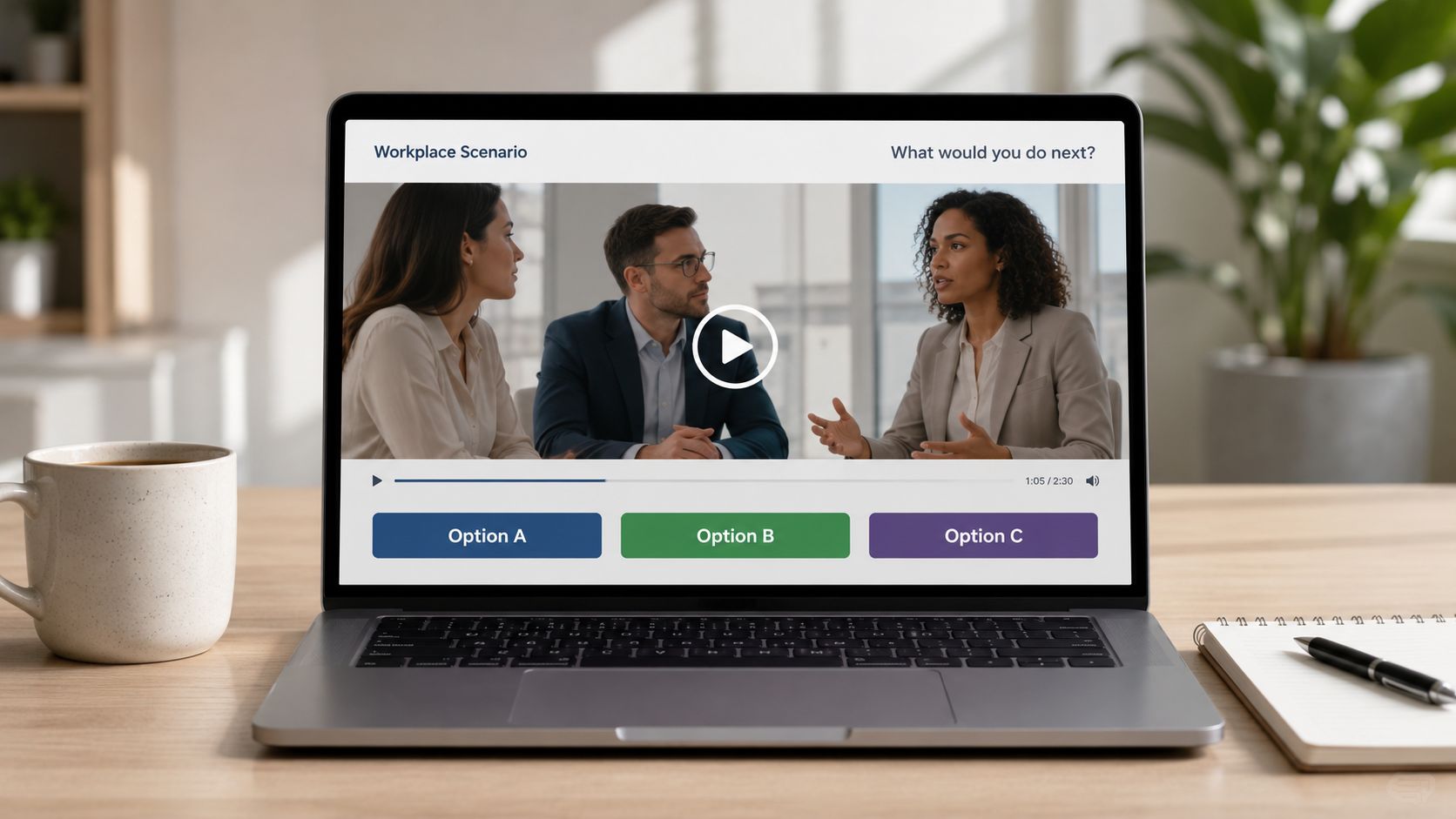
Situational Judgment Tests predict behavior by measuring decision-making, problem-solving, and task prioritization when candidates respond to hypothetical workplace scenarios, as explained by [Test Partnership's psychometric testing overview](https://www.testpartnership.com/psychometric-test.html). Unlike many aptitude formats, they don't depend on one right answer. They reveal how a person handles tradeoffs, pressure, conflict, and incomplete information.
Why simulations often outperform generic fit judgments
A candidate interviewing for a customer support manager role may speak confidently about escalation handling. A simulation can test whether they prioritize empathy, policy, and resolution in the right order. A sales candidate may describe consultative selling well. A scenario can reveal whether they become pushy, passive, or commercially sharp when the buyer introduces risk.
Psychometric test types become highly actionable inside AI-powered Synopsix workflows. Simulation outputs can sit beside personality and cognitive signals, giving hiring teams a composite view that is closer to real work. The person who scores well cognitively but handles stakeholder tension poorly won't look identical to the person who reasons well and also chooses sound interpersonal moves under pressure.
Design rules that raise validity
The quality of a simulation depends on realism. Generic scenarios produce generic insight.
A healthcare employer might simulate triage communication. A SaaS company might simulate cross-functional conflict during a product delay. A customer service center might simulate an upset client with incomplete information. In each case, the assessment is testing behavior under recognizable job pressure, which is exactly where hiring mistakes often show up first.
8-Type Comparison of Psychometric Assessments
| Assessment | Implementation complexity 🔄 | Resource requirements ⚡ | Expected outcomes 📊 | Ideal use cases 💡 | Key advantages ⭐ | |---|---:|---:|---|---|---| | Personality Assessments (Big Five/OCEAN Model) | Moderate, standardized instruments; needs skilled interpretation | Low–Moderate, online questionnaires, modest admin | Predicts behavioral fit, development areas, long-term satisfaction | Team design, leadership development, long-term hiring decisions | Scientifically validated, broad applicability, actionable developmental insights ⭐⭐⭐ | | Cognitive Ability Assessments | Moderate, timed, standardized; proctoring/scoring required | Low–Moderate, short administration, digital delivery, normative data | Strong predictor of job performance and trainability | Early screening for complex/analytical roles (tech, finance, leadership) | Highest single predictor of job success; objective and efficient ⭐⭐⭐⭐ | | Emotional Intelligence (EI) Assessments | Moderate–High, 360s or ability tests; requires confidentiality and coaching | Moderate, rater input or trained administrators; follow-up coaching | Predicts leadership effectiveness, team engagement, retention | Leadership development, executive coaching, customer-facing roles | Coachable competencies tied to leadership and engagement outcomes ⭐⭐⭐ | | Work Style and Job Fit Assessments | Low, focused, role-specific; easy business translation | Low–Moderate, brief tests, role benchmarks, occasional validation | High job-specific predictive validity; faster hiring decisions | Role selection, onboarding, team placement | Actionable role-fit recommendations; reduces mis-hires and speeds decisions ⭐⭐⭐ | | Values and Motivation Assessments | Low, short surveys; needs clearly defined organizational values | Low, quick to administer; requires value mapping for comparison | Predicts long-term engagement, retention, cultural alignment | Cultural-fit hiring, retention strategies, mission-driven organizations | Strong predictor of retention and cultural fit; guides retention planning ⭐⭐⭐ | | Leadership Competency & Potential Assessments | High, multi-source 360s, predictive models; sensitive feedback process | High, extensive data collection, expert interpretation, development programs | Identifies high potentials, reduces mis-promotions, builds bench strength | Succession planning, executive selection, accelerated development programs | Comprehensive assessment of potential and derailers; supports succession planning ⭐⭐⭐⭐ | | Team Dynamics & Interpersonal Style Assessments | Moderate, team-level analysis and compatibility modeling | Moderate, multiple respondents, team analytics and visualization tools | Predicts collaboration effectiveness; identifies friction and communication gaps | Team formation, redesigning underperforming teams, distributed teams | Enables intentional team design and proactive conflict prevention ⭐⭐⭐ | | Behavioral Simulation & Situational Judgment Assessments | High, immersive, role-specific scenario design and validation | High, scenario development, platform/tech, continuous updates | Very high predictive validity; realistic preview of on-the-job behavior | High-stakes or context-dependent roles (sales, healthcare, customer ops) | High face validity, strong prediction of performance, rich behavioral data ⭐⭐⭐⭐ |
Putting Psychometrics into Action
Psychometric testing is most useful when HR leaders stop treating assessments as isolated events and start treating them as decision infrastructure. The field already gives you a stable foundation. Cognitive ability tests measure reasoning and learning potential. Personality questionnaires capture typical behavior and collaboration style. Behavioral, motivational, team, leadership, and situational tools add the context that resumes and interviews usually miss.
The deeper lesson is that psychometric test types are not interchangeable. Each one predicts a different slice of human performance. Cognitive tests help estimate whether someone can handle complexity. Personality assessments clarify likely work patterns. Situational and simulation tools reveal judgment in motion. Team and leadership assessments show whether success is likely to scale beyond individual contribution. When HR teams combine those tools thoughtfully, they move from impression-based hiring to evidence-based talent decisions.
That combination matters because context changes validity. One of the most overlooked risks in assessment strategy is assuming a test is universally portable across cultures and business environments. Existing guidance often misses that point. Data summarized in this [NCBI chapter on psychological assessment considerations](https://www.ncbi.nlm.nih.gov/books/NBK581902/) notes that 40% of personality test results lack cross-cultural validity when norms from Western samples are misapplied to non-Western candidates. For global employers, that isn't a footnote. It's a governance issue. If your organization hires across regions, your validation process should examine local norms, language, interpretation practices, and downstream adverse impact.
This is why a pilot matters before enterprise rollout. Start with a specific hiring family or internal mobility process. Choose assessment types that match actual role demands. Validate benchmarks with hiring managers and people analytics partners. Review whether the results improve interview quality, shortlist precision, and onboarding support. If they do, scale the workflow. If they don't, adjust the role model or the test mix.
The most mature organizations also carry assessment insight beyond selection. They use it during onboarding, team formation, promotion reviews, manager coaching, and succession planning. That lifecycle approach turns psychometrics from a screening tool into a talent operating system. It also makes the business case stronger because one assessment can support multiple people decisions over time.
AI matters here, but only when it sits on top of validated inputs. Synopsix is useful because it translates psychometrics into practical business signals instead of leaving leaders with technical jargon. Teams can assess candidates and employees quickly, generate comparable behavioral profiles, and act on those results through simulations, compatibility analysis, and development plans. That's the operational layer many companies are missing when they buy tests but don't change decisions.
If you're refining your assessment stack, this review of [top tech candidate assessment tools](https://talantrix.com/resources/blog/candidate-assessment-tools/) adds useful market context. Then bring the focus back to your own system. Pilot the right instruments. Validate for context. Train managers on interpretation. Build workflows that connect assessment data to actual people decisions. That's how HR teams predict human behavior more reliably and make smarter people decisions.
---
Synopsix helps HR leaders turn psychometric insight into action. If you want a faster way to assess talent, compare behavioral profiles, model team fit, and support hiring and development with AI-powered guidance, explore [Synopsix](https://synopsix.ai).