10 Best Recruitment Analytics Tools for 2026
By Synopsix · July 30, 2026 · 17 min read
Recruitment analytics tools are no longer just reporting layers. They've become decision systems because hiring data now lives across ATS platforms, HRIS records, interview tools, and sourcing workflows, and modern dashboards pull those signals into stage-level patterns for time-to-hire, time-to-fill, source effectiveness, pipeline conversion, recruiter productivity, and offer acceptance rate [100 Hires' 2026 recruitment analytics overview](https://100hires.com/best-recruitment-analytics-software.html). That shift matters in a market where U.S. non-executive cost-per-hire is around $4,700 to $4,800 and median time-to-fill has reached 44 days, both cited in 2026 benchmarking from [Factorial's recruitment analytics guide](https://factorialhr.com/blog/best-recruitment-analytics-software/). The best platforms help you see where candidates drop, which channels convert, and which teams are creating friction before the hiring bill grows.
This list focuses on the tools that do the most useful analytical work, from ATS-native reporting to people analytics and behavioral intelligence. The strongest products don't just show history, they help recruiting teams, CHROs, and hiring managers make better calls with cleaner data and clearer signals. If you want a deeper strategic view of how AI fits into this category, [DialNexa Labs' guide on AI recruitment](https://dialnexa.com/blogs/ai-powered-recruitment-tools/) is a useful companion read.
1. Synopsix
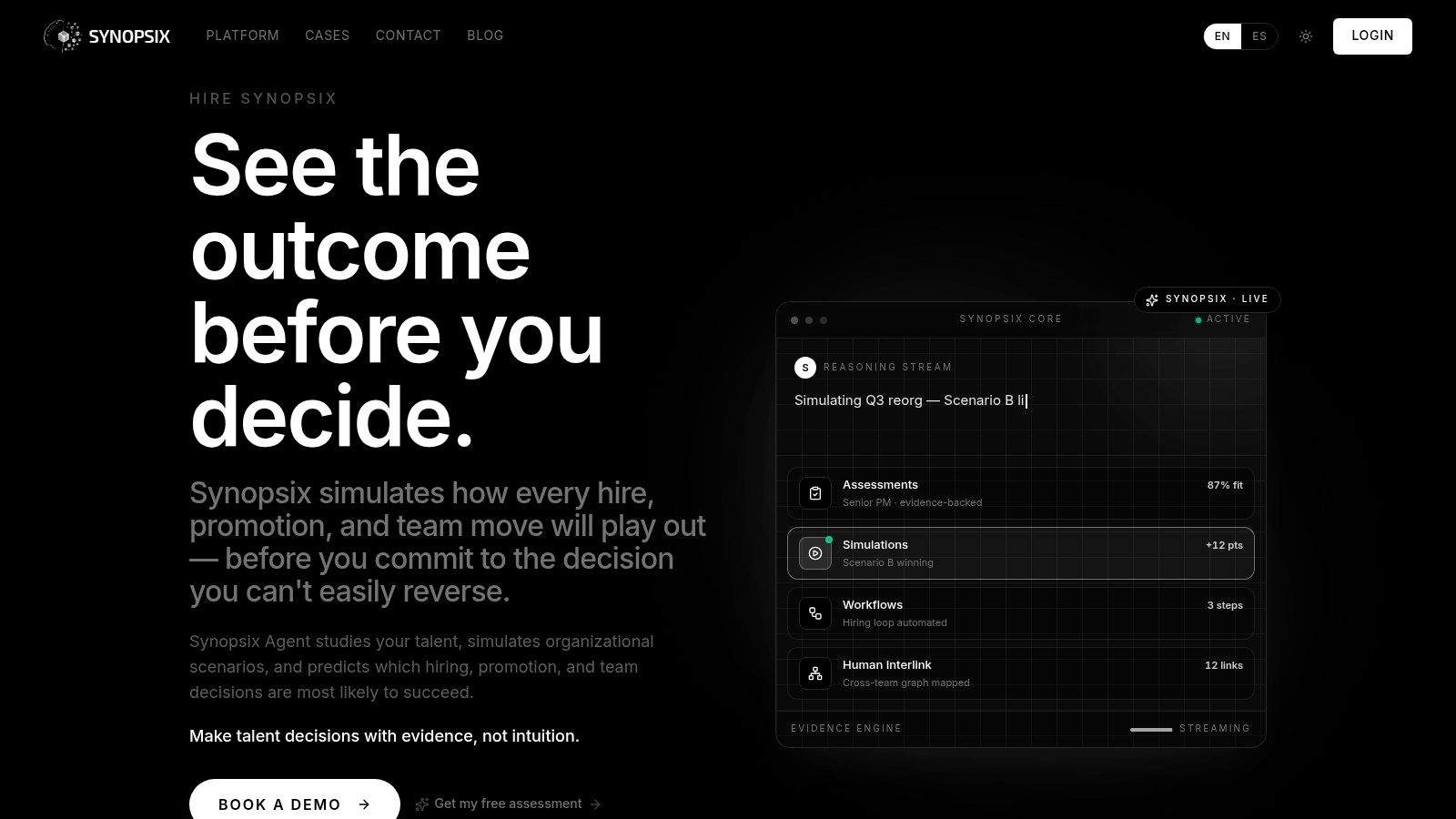
Synopsix sits in a different class from most recruitment analytics tools because it is built around predictive people decisions, not just funnel reporting. The platform combines Assessments & Profiles, Intelligence Reports, Predictive Simulations, and Human Interlink into one conversational experience, so CHROs, talent teams, hiring managers, and executive search firms can move from assessment data to business-ready guidance without translating psychometrics themselves.
Why it stands out
Synopsix is designed to benchmark people against your Org DNA, then model how they're likely to behave in hiring, promotion, and team-design scenarios. That's a meaningful step beyond the category definition in [100 Hires' 2026 market review](https://100hires.com/best-recruitment-analytics-software.html), which describes modern tools as turning applications, interviews, offers, and rejections into pattern data. Synopsix pushes that pattern analysis into human behavior prediction, with executive-friendly reports that highlight fit, risk, and role-specific action.
The vendor cites 40% faster hiring decisions, 60% fewer mis-hires, over 50K profiles generated, 98% assessment accuracy, 10K+ people decisions modeled, about 87% evidence-match accuracy, and a path to a defensible hiring call in under 48 hours, all as vendor-claimed outcomes on the website. It also says the platform is GDPR-aligned, 100% explainable, and has SOC2 in progress. Those claims are vendor-provided, but they point to a clear product thesis, speed up the decision, reduce the risk of misalignment, and keep the logic understandable to non-specialists.
> Practical rule: If your recruiting team already has enough stage data and still makes inconsistent calls, the problem isn't reporting. It's interpretation. Synopsix is built for that gap.
Best fit and limitations
The strongest fit is an organization that wants one system to support hiring, promotion, succession, and team design. Synopsix's SYN-X Agent conversational interface, Predictive Simulations, and Human Interlink graph make it especially compelling for leaders who want to preview likely friction before committing. Its workflows also extend insight into action, with follow-up steps like interview questions, coaching plans, approvals, and webhooks.
The tradeoff is procurement friction. Pricing isn't published, so teams need a demo or early access to evaluate ROI against the vendor's claimed outcomes. It also depends on the quality of the inputs, which means organizations need to commit to their benchmarks and data setup before the platform can do its best work.
Website: [Synopsix](https://synopsix.ai)
2. Gem
Gem is the clearest example of a talent CRM first, analytics second platform, and that matters if your recruiting engine starts with sourcing rather than inbound applicants. It combines CRM workflows, outreach, scheduling, and pipeline reporting, and its Talent Compass module pulls ATS and CRM data into one view for conversion, forecasting, DEI, and benchmark analysis.
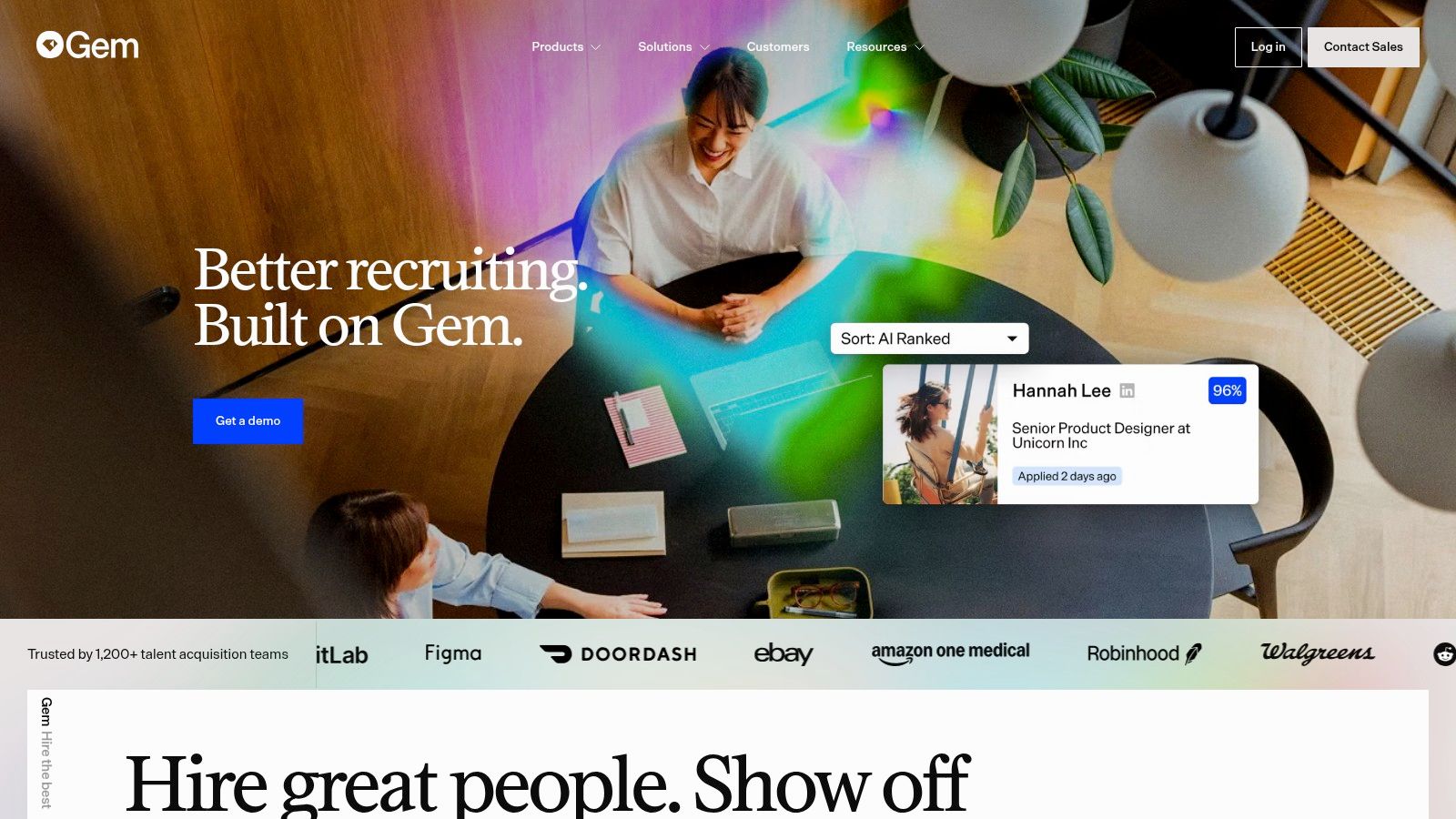
Gem works best when recruiters need to answer practical questions like which campaigns are producing real candidates, where pipeline leakage happens, and how close the team is to headcount goals. That makes it a strong fit for proactive recruiting teams that care about forecasting, outreach sequence performance, and full-funnel visibility. It can run as an add-on to an existing ATS or as a broader all-in-one environment.
> The platform choice is simple here, if your recruiting motion is outbound-heavy, a CRM with analytics is more useful than a dashboard bolted onto an ATS.
The limitation is also simple. Gem's advanced analytics are only as good as the cleanliness of the ATS data feeding them, and enterprise pricing is custom rather than public. That means procurement teams need to be realistic about integration effort before expecting the reporting layer to work like a plug-in. Still, for teams that build talent pools deliberately and want analytics tied to outreach behavior, Gem is one of the most operationally relevant options.
Website: [Gem](https://www.gem.com)
3. Ashby
Ashby is the most obvious choice for teams that want ATS-native analytics without waiting on a BI team. It was built around fast reporting, which is why data-savvy recruiting groups often prefer it when they need flexible dashboards, templated reports, and self-serve analysis inside the system of record.
Ashby's strength is speed plus control. It gives recruiting operators a native analytics layer that can replace a lot of spreadsheet work, and that reduces dependence on external BI tools for common questions like pipeline health, scheduling throughput, and recruiter performance. Its seat-based model also fits larger organizations that need to assign access by role.
The weakness is the same one that shows up in many ATS-native systems. Deep historical analysis is only as strong as the quality of your data migration and ongoing data hygiene. If older records are messy, the dashboard will be fast but not necessarily trustworthy. Ashby is the right call when your team already knows what metrics it wants and values usability over a more abstract analytics stack.
Website: [Ashby](https://www.ashbyhq.com)
4. Greenhouse
Greenhouse is one of the clearest examples of ATS-native analytics because its reporting sits inside the hiring workflow rather than beside it. Teams can track sourcing, pipeline health, recruiter productivity, and hiring process visibility from the same system they use to manage requisitions, interviews, and offers. Its Analytics product adds more flexible views for buyers who need more than the default reports.
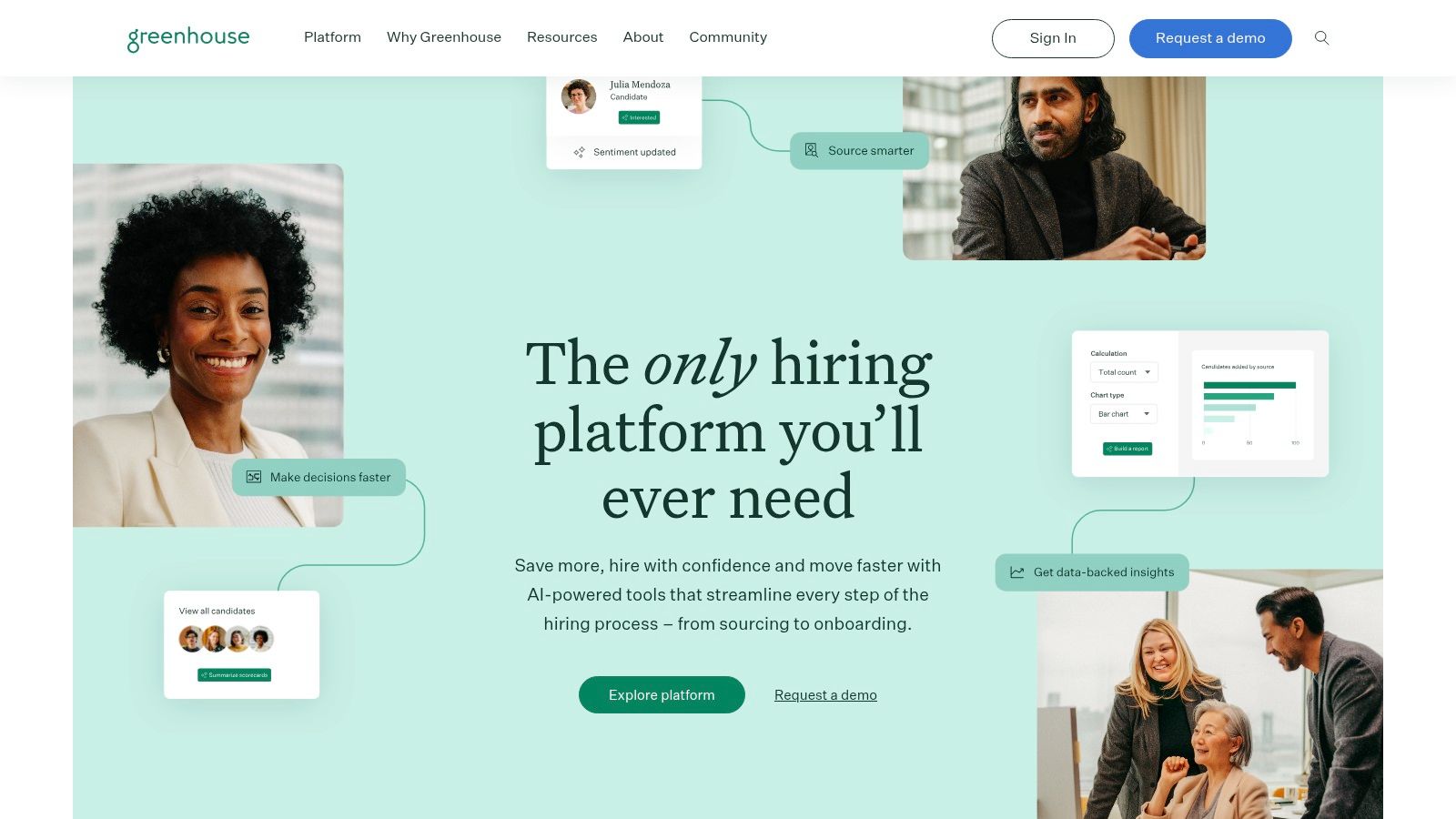
That design matters because [HR.com's Future of Recruitment Technologies 2025-26](https://eightfold.ai/wp-content/uploads/hr-future-of-recruitment-technologies.pdf) shows that 78% of HR professionals use ATS platforms, while only 35% report using recruitment analytics. Many teams still make decisions from transactional ATS data rather than from a separate analytics layer, which makes Greenhouse relevant for organizations that want better visibility without changing systems. It also fits the selection logic outlined in [recruitment efficiency metrics](https://synopsix.ai/blog/recruitment-efficiency-metrics), where the first question is whether the system can already surface the operational measures recruiters rely on every day.
Greenhouse is also useful for teams that care about consistency. Standardized reporting and role-based access help managers work from the same definitions, which reduces the drift that often appears when different departments build their own versions of funnel metrics. If your organization already runs on Greenhouse, the analytics layer extends the system you use instead of asking recruiters to learn a separate tool. For teams comparing external data sources, [talent insights from WebscrapingHQ](https://www.webscrapinghq.com/blog/why-top-b2b-platforms-are-scraping-google-jobs-for-strategic-talent-insights) can complement ATS reporting by adding market context that internal hiring data cannot show.
The tradeoff is depth and packaging. More advanced Analytics features sit behind add-ons or upgrades, and cross-system analysis can still require an external BI layer. Greenhouse is strongest for teams that need clean funnel visibility, source performance, and process reporting inside the ATS, not for buyers looking for a broader people analytics stack.
Website: [Greenhouse](https://www.greenhouse.io)
5. Lever
LeverTRM is a strong middle ground for teams that want ATS and CRM data in one place but don't want to sacrifice custom exploration. Its Visual Insights dashboards give you curated reporting, while Data Explorer lets more technical users build custom charts with Looker-based flexibility.
That combination matters because many recruiting teams don't need a full BI warehouse, they need enough structure to standardize the basics and enough freedom to investigate anomalies. Lever handles sourcing, pipeline, offers, and recruiter KPIs in a single platform, so the analytics aren't isolated from the operating system. Its template library and chart directories also make adoption easier for teams that don't have a dedicated analyst.
The advantage is balance. Lever doesn't push you into one extreme or the other, it gives you useful dashboards for day-to-day tracking and an analysis layer for deeper questions. The tradeoff is that complex customization still rewards analytics literacy, and pricing for advanced modules isn't public. If your team has enough data maturity to ask better questions but not enough bandwidth to build everything from scratch, Lever is a practical fit.
Website: [Lever](https://www.lever.co)
6. iCIMS Talent Cloud Analytics
iCIMS is the enterprise option for organizations that need governance, configurability, and raw data access rather than a lightweight reporting overlay. Its Talent Cloud includes configurable dashboards, KPIs, conversion metrics, and options for external BI access, which makes it attractive for larger U.S. organizations with multi-team hiring operations.
The platform's value is breadth. It covers the recruiting lifecycle from source to hire and includes career-site analytics, which helps teams understand both traffic and funnel behavior. It also gives enterprise buyers a path to deeper visualization and governance through the Advanced Analytics add-on, which matters when reporting needs to be audited or blended with outside systems.
There's a reason this kind of architecture matters. [SNS Insider's HR analytics market report](https://www.snsinsider.com/reports/hr-analytics-market-5676) says only 21% of organizations are at advanced HR analytics maturity, while 41% sit at intermediate maturity and 76% have some form of HR analytics. In other words, most companies aren't ready for advanced predictive modeling on day one. iCIMS is a better fit when the organization already has process discipline and wants a platform that can scale with governance.
The tradeoff is TCO. Pricing is custom, enterprise implementations can get expensive, and cross-system analytics may require mapping work. For large employers, though, that's often a fair exchange for a platform that can stand up to compliance pressure and volume.
Website: [iCIMS](https://www.icims.com)
7. Visier People Talent Acquisition
Visier sits in the people analytics platform category, and that distinction matters because it is built to interpret workforce data rather than manage requisitions. It brings ATS and HCM data together so CHROs and people analytics teams can evaluate quality-of-hire, recruiter workload, pipeline diagnostics, and time-to-fill forecasting in one place.
The main advantage is how it reframes recruiting performance for business leaders. Instead of presenting hiring metrics only as source or funnel data, Visier translates them into workforce outcomes that finance, operations, and the C-suite can use. That matters most when leaders want to know whether hiring is producing better employees, not just faster hires. Visier's quality-of-hire view is especially useful because it connects applicant data with employee outcomes, which gives TA leaders a stronger basis for discussing downstream hiring quality.
For teams still building their analytics vocabulary, a primer on [what people analytics covers](https://synopsix.ai/blog/what-is-people-analytics) helps explain why this layer sits above an ATS. Visier is strongest when the question shifts from “What happened in the funnel?” to “What did those hires become after onboarding?”
> Practical insight: If leadership keeps asking whether hiring quality is improving, an ATS report rarely settles the issue. A people analytics layer like Visier gets closer because it links pre-hire and post-hire data and makes the quality question measurable across the employee lifecycle.
The tradeoff is implementation effort. Visier only reaches full value when ATS and HRIS data are integrated cleanly, and sourcing or outreach analytics still sit closer to the ATS or CRM. It is a strong choice for strategic visibility, but it is not the first system to buy if the team still struggles to trust its source data or maintain data discipline.
Website: [Visier](https://www.visier.com)
8. LinkedIn Talent Insights
LinkedIn Talent Insights is not a pipeline execution tool, and that's exactly why many workforce planners value it. It gives recruiters and hiring leaders real-time market intelligence on talent pools, skills availability, locations, companies, and diversity indicators, which is useful for headcount planning and location strategy.
It answers a different question than ATS analytics. Instead of asking how your funnel is moving, it asks whether the labor market can support the plan in the first place. That makes it a strong companion for executive reporting and geography decisions, especially when the recruiting team needs to justify sourcing strategy before requisitions open.
The limitation is obvious. It's custom-priced, license-heavy for large teams, and not designed to measure what happened inside your own funnel. So it belongs in a planning stack, not a day-to-day hiring dashboard. If you need to understand the external market before you staff up, though, it's one of the most defensible choices.
Website: [LinkedIn Talent Insights](https://business.linkedin.com/hire/talent-insights)
9. Eightfold AI
Eightfold AI fits organizations that want skills-based hiring and internal mobility in the same intelligence layer. Its deep-learning skills graph matches candidates to roles, and it also extends into workforce planning and talent movement across the enterprise. For readers comparing this category with other talent intelligence platform options, the selection logic is less about reporting depth alone and more about whether the system can connect external hiring signals with internal mobility decisions, a distinction also explored in this [talent intelligence platform analysis](https://synopsix.ai/blog/talent-intelligence-platform).
Its strength is scope. Eightfold is not limited to sourcing analytics or ATS reporting, it tries to connect acquisition, internal mobility, and workforce strategy inside one model. That makes it relevant for companies that use skills as the unit of hiring, rather than relying mainly on job titles and resume keywords. The platform also includes agentic AI assistants for screening and interview summaries, which can reduce manual work in high-volume settings.
That breadth comes with a cost in implementation effort. Enterprise systems like Eightfold usually require change management, and the predictive layer can be harder to explain to non-technical stakeholders who want a simple funnel report. For large employers with mature workforce-planning teams, that tradeoff is acceptable. For smaller teams, it can be too much platform for too little signal.
Website: [Eightfold AI](https://eightfold.ai)
10. Beamery Talent Analytics
Beamery is another talent lifecycle management platform, but its analytics emphasis is on pipeline health, campaign engagement, and skills insights. That makes it especially useful for organizations trying to connect talent CRM performance with broader workforce planning.
Beamery is strongest when recruiting is treated like a long-term pipeline, not a series of one-off requisitions. The platform's real-time dashboards and campaign analytics help teams understand whether talent marketing is building future supply, while its skills intelligence supports more strategic workforce decisions. Executive-friendly ROI framing also makes it easier to justify the platform to leadership.
The tradeoff is scope. Beamery is broad, and that breadth can be overkill if all you really need is reporting. Pricing and packaging are custom, so buyers need to be clear about whether they want a CRM, a talent intelligence layer, or a lifecycle platform that combines both.
Website: [Beamery](https://beamery.com)
Top 10 Recruitment Analytics Tools Comparison
| Product | Core focus & key features ✨ | UX & quality ★ | Value / price 💰 | Target audience 👥 | |---|---:|:---:|:---:|:---| | Synopsix 🏆 | ✨ Assessments & Profiles, Predictive Simulations, Human Interlink, plain‑language Intelligence Reports | ★★★★★ (98% claimed; explainable) | 💰 Custom / demo; vendor ROI claims (faster hires, fewer mis-hires) | 👥 CHROs, TA leaders, hiring managers, exec search | | Gem | ✨ Talent CRM + sourcing, outreach, pipeline & DEI analytics | ★★★★☆ (strong pipeline analytics) | 💰 Custom / startup program available | 👥 Sourcers, TA teams, recruiters | | Ashby (ATS + Analytics) | ✨ Native fast analytics, scheduling, AI Notetaker, seat-based model | ★★★★☆ (best-in-class reporting speed) | 💰 Seat-based / custom | 👥 Data-savvy TA teams, mid‑to‑large orgs | | Greenhouse | ✨ ATS with standardized reports + Greenhouse Analytics add‑on | ★★★★ (robust out‑of‑box dashboards) | 💰 Core ATS + paid Analytics add‑ons | 👥 Recruiting teams seeking standardized processes | | Lever (LeverTRM) | ✨ ATS+CRM with Visual Insights & Looker Data Explorer | ★★★★ (balanced OOTB + self‑serve) | 💰 Custom / modular pricing | 👥 TA teams wanting flexible dashboards & CRM | | iCIMS Talent Cloud | ✨ Enterprise dashboards, DEI metrics, raw data export for BI | ★★★★ (enterprise governance & scalability) | 💰 Custom / enterprise pricing | 👥 Large US orgs, enterprise TA teams | | Visier People – TA | ✨ Unifies ATS+HCM for quality‑of‑hire, forecasting & capacity | ★★★★☆ (turnkey TA analytics & benchmarking) | 💰 Custom / integration required | 👥 CHROs, people analytics teams | | LinkedIn Talent Insights | ✨ Real‑time talent pool, skills, location & competitor insights | ★★★★☆ (unmatched coverage for market sizing) | 💰 Custom licensing | 👥 Workforce planners, strategic recruiters | | Eightfold AI | ✨ Skills graph, large‑scale matching, internal mobility & AI assistants | ★★★★☆ (strong for skills‑based hiring) | 💰 Custom / enterprise investment | 👥 Enterprises focused on skills & mobility | | Beamery | ✨ Talent CRM + lifecycle analytics, campaign & skills insights | ★★★★ (CRM + talent marketing analytics) | 💰 Custom / scoped pricing | 👥 TA teams blending marketing & sourcing |
The Future is Predictive Making Smarter People Decisions
The strongest recruitment analytics tools are splitting into three archetypes. ATS-native platforms like Greenhouse, Ashby, and Lever make stage data more usable. People analytics platforms like Visier and Eightfold connect hiring to broader workforce outcomes. Behavioral intelligence platforms like Synopsix go a step further by modeling how people are likely to behave in real decisions, not just where they sit in a funnel.
That last category is where the market is headed. The most useful analytics products no longer stop at conversion ratios and recruiter dashboards. They connect applications, interviews, offers, and downstream performance into a picture that helps leaders decide who to hire, how to build teams, and where risk is hiding before it becomes expensive. This represents a fundamental shift in the category, moving from descriptive reporting to decision support, and ultimately toward predictive judgment.
The data in the market already points there. HR.com's 2025-26 research shows that ATS adoption is far ahead of recruitment analytics adoption, which means most organizations are still early in the maturity curve [HR.com Future of Recruitment Technologies 2025-26](https://eightfold.ai/wp-content/uploads/hr-future-of-recruitment-technologies.pdf). SNS Insider's HR analytics market report also suggests that advanced analytics capability is still the exception, not the norm [SNS Insider HR analytics market report](https://www.snsinsider.com/reports/hr-analytics-market-5676). In that environment, the winning tool isn't always the biggest platform. It's the one that matches your data quality, your workflow, and the decision you need to make.
If you're choosing now, start with the problem, not the product. Use ATS analytics for funnel clarity, use people analytics for strategic workforce visibility, and use behavioral intelligence when you need a clearer read on fit, collaboration, and decision risk. The next advantage in recruiting won't come from collecting more numbers. It'll come from making better decisions with the numbers you already have.
---
If your team wants recruitment analytics that go beyond reporting and into decision quality, [Synopsix](https://synopsix.ai) is built for that shift. It turns behavioral assessment data into clear hiring, promotion, and team-design guidance, so leaders can model risk before they commit. Visit Synopsix to see how predictive people intelligence can strengthen your recruiting and talent decisions.