10 Talent Development Best Practices for CHROs in 2026
By Synopsix · October 9, 2026 · 22 min read
A quarter-end talent review is approaching. Three high-potentials are shortlisted for a regional leadership role, their performance records look similar, and nobody can explain who will stay effective under pressure, manage difficult stakeholders, or make sound decisions when the brief changes. The discussion drifts toward confidence, visibility, tenure, and the preferences of the loudest executive in the room.
That's where talent development stalls without evidence. Training catalogs grow, development plans multiply, and stretch assignments go to people who already have the strongest sponsorship. The organization talks about potential, but makes decisions with incomplete signals.
The following talent development best practices are built around decisions a CHRO may need to make this quarter: who receives a development plan, who gets a stretch role, which capability gaps threaten strategy, how teams should be rebalanced, and which successors are ready. Behavioral assessment data links the practices, but it doesn't replace judgment. It gives leaders a more disciplined way to connect role requirements, observed behavior, development actions, and business decisions.
1. Align talent and organizational strategy
Start every capability plan from the strategy memo the board approved this quarter. If the business is expanding regionally, shortening product cycles, or changing its operating model, the CHRO must define the capabilities and behaviors that will make the plan executable. Hiring, development, mobility, and organization design can then address the same capability map.
Consider a technology business entering regulated markets. Technical expertise may be available, while risk judgment, stakeholder communication, disciplined documentation, and decision-making with incomplete information remain uneven. Assess those behaviors across functions before deciding whether the gap calls for hiring, reskilling, team redesign, or coaching. Screen incoming candidates through your [candidate hiring portal](https://www.parakeet-ai.com/hiring) before deciding whether a gap needs hiring or development.
The [World Economic Forum's Future of Jobs Report 2025](https://reports.weforum.org/docs/WEF_Future_of_Jobs_Report_2025.pdf) draws on responses from more than 1,000 major employers representing over 14 million workers. It estimates that 39% of workers' core skills will change by 2030, while skill gaps are cited as the leading barrier to business transformation by 63% of employers. Capability planning therefore belongs in enterprise decisions, with behavioral evidence helping leaders judge readiness and exposure.
Make the strategy operational
Use the next business review to document:
Choose one strategic initiative and build a capability roadmap around it. Ask managers to describe successful behavior in real work, compare that description with assessment evidence, and assign an owner to each response. A capability roadmap for one initiative is the fastest way to test whether the map works.
2. Build development plans around role competencies
A strong functional expert is being considered for a general management role. The risk is promoting technical mastery while overlooking behaviors the broader role demands, such as prioritizing across functions, delegating decisions, handling disagreement, and explaining trade-offs to senior stakeholders. A behavioral assessment can establish a baseline, but observed work and structured feedback must show whether the person can apply those behaviors.
That scenario gives the CHRO a clear decision for this quarter: what evidence should determine whether the candidate receives a development plan, a stretch assignment, or a succession recommendation? Role competencies answer that question by translating the target job into specific behaviors, practice opportunities, and readiness checks. They prevent vague goals such as “be more strategic” from turning into activity without direction.
Assessment evidence is more useful when tied to the work. A meta-analysis reviewing 494 studies and 97 independent samples totaling 13,521 participants found a corrected mean validity of 0.29 for personality measures in confirmatory research designs. Validity rose to 0.38 when researchers used job analysis to select the measures, according to the [meta-analysis of personality measures and job performance](https://onlinelibrary.wiley.com/doi/abs/10.1111/j.1744-6570.1991.tb00696.x). Use behavioral signals to examine the demands of the role, not to label people in the abstract.
Make the plan usable by another manager
Write four decisions into every plan:
For the functional expert, that might mean leading a cross-functional initiative, documenting delegated decisions, and collecting feedback from affected stakeholders. The manager can then compare the evidence with the competency model rather than relying on reputation.
Set a meaningful horizon for complex roles and refresh competencies as technology and market requirements change. Rewriting the succession slate in behavioral terms takes an afternoon and immediately exposes which nominations rest on labels rather than evidence.
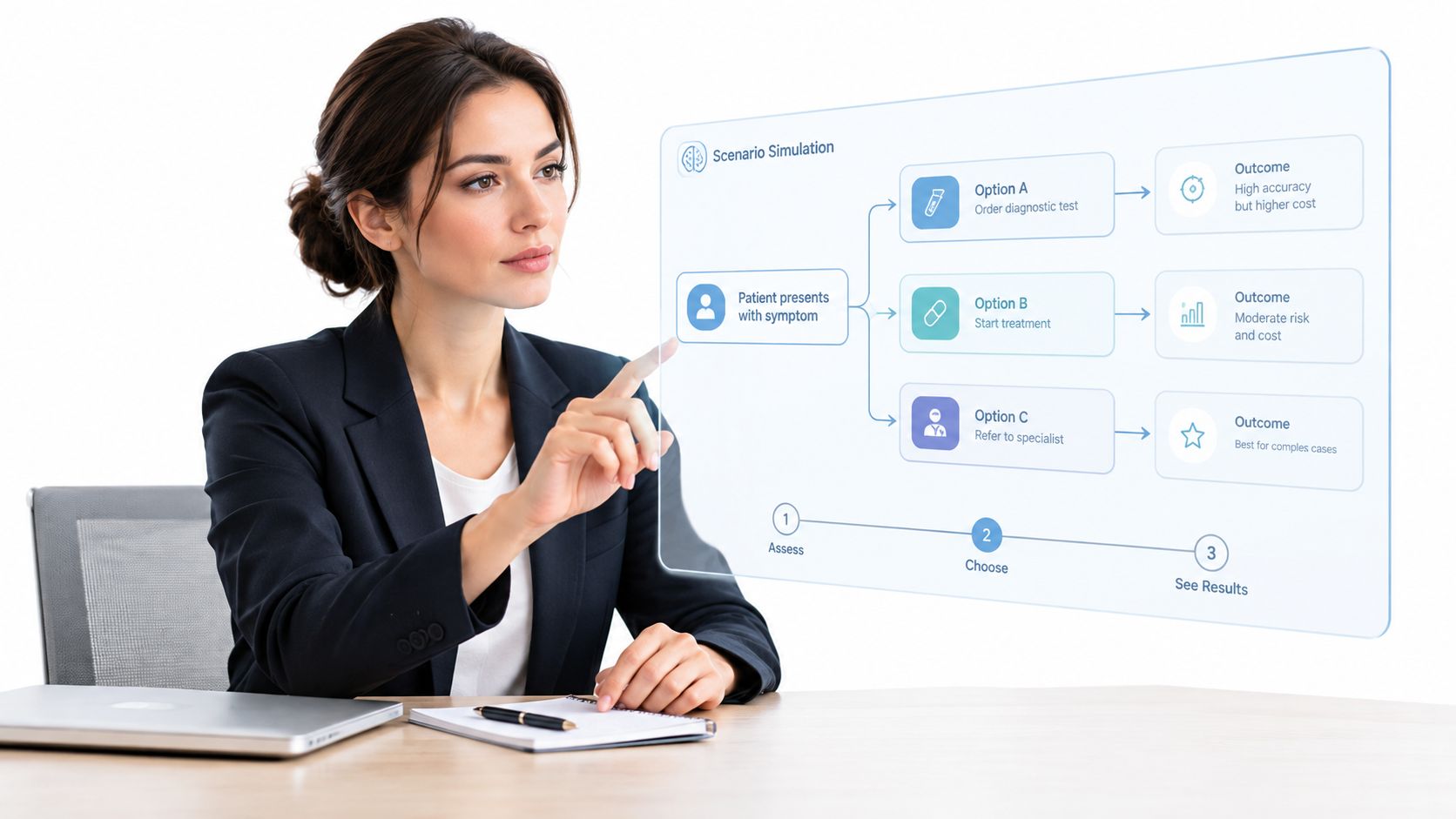
3. Replace annual snapshots with continuous capability assessment
A product leader preparing for a new market launch cannot wait for the annual review to decide who should lead customer communication or coordinate across functions. The CHRO needs current evidence about which capabilities are strengthening, which are losing relevance, and who is ready for a broader assignment.
Keep the assessment cycle light: one recurring signal, tied to live work, reviewed each quarter. A capability conversation can examine a recent decision, a stakeholder interaction, and the next assignment that would provide useful practice. Short pulse assessments may support the discussion, while direct observation shows whether behavior is changing on the job.
The LinkedIn 2025 Workplace Learning Report found that only 15% of employees said their manager helped them build a career plan in the previous six months, a decline of five percentage points from 2024. The gap points to a management practice problem, not merely a content problem. Managers need a repeatable way to connect development with current work and upcoming opportunities.
Keep the cycle light and useful
Use a simple operating rhythm:
For the product team, the leader can review decision quality, customer communication, and cross-functional coordination at each planning milestone. Those observations can inform who receives the next stretch role and what support that assignment requires. Tracking whether the milestone conversation changed a staffing call is the only proof the rhythm is worth keeping.
4. Use strengths without ignoring behavioral diversity
A strength overextended becomes the risk profile of the team. A highly methodical person may bring planning discipline to a complex launch. Someone who challenges assumptions may improve risk detection, while a relationship-oriented colleague may stabilize stakeholder trust during change. The CHRO's decision this quarter is where each strength belongs, and what guardrails keep it useful.
Decisiveness can become premature closure. Sociability can crowd out quieter contributors. Detail orientation can slow decisions when speed matters. Development plans should therefore pair a natural contribution with the situations that require regulation.
Work context matters when interpreting behavioral assessment data. Research comparing generic and work-contextualized personality measurement found average validity of 0.11 for non-contextualized measures and 0.24 for contextualized measures, according to the [research on personality measurement in work contexts](https://research.vu.nl/ws/portalfiles/portal/278187338/Personality_Personnel_Selection_and_Job_Performance.pdf). Ask how a behavior appears in the target role, such as whether conscientiousness improves planning accuracy or follow-through.
For a product launch, make the staffing decision with four prompts:
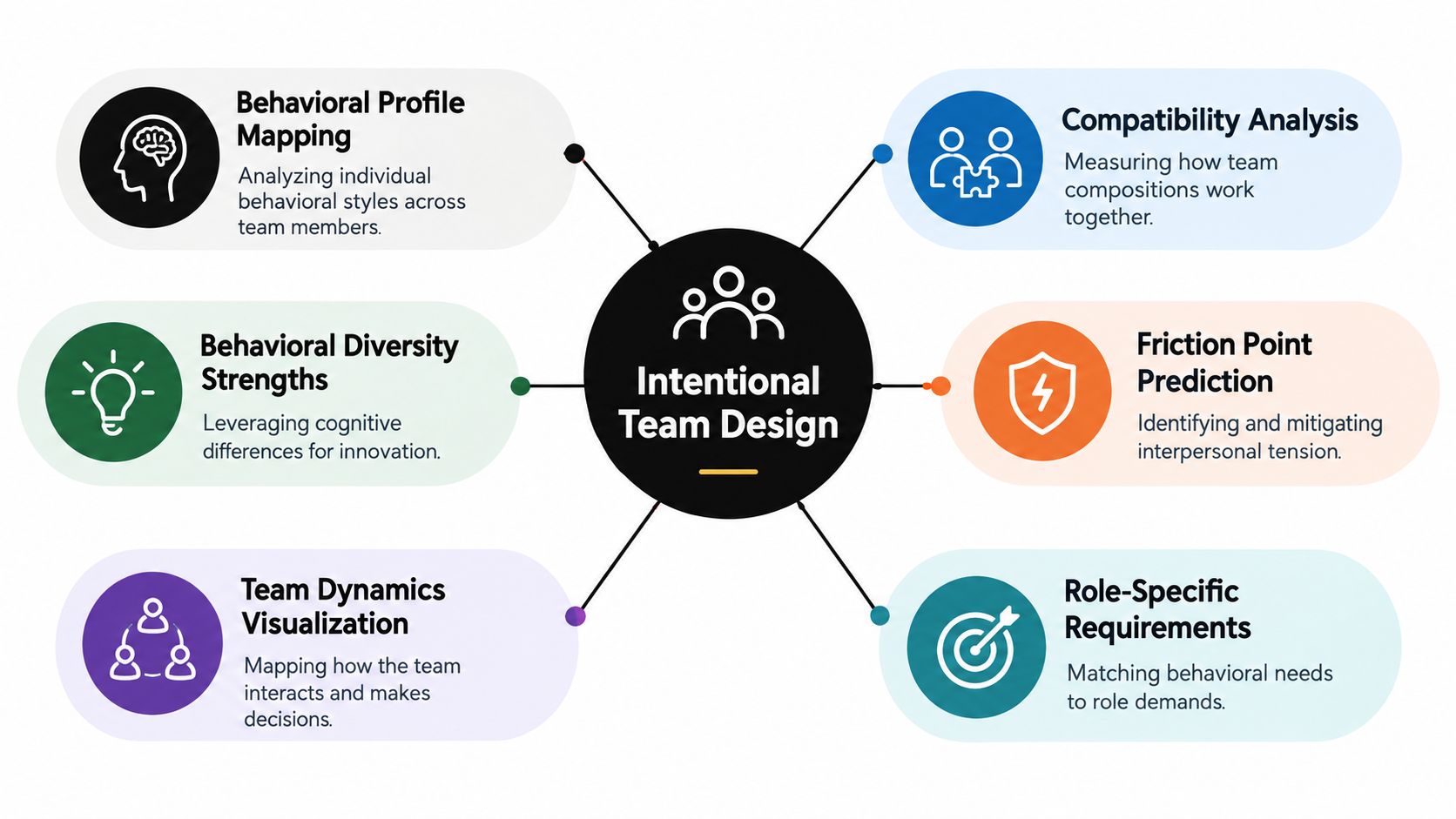
Strengths language should sharpen performance discussions. If a launch team's decisive lead closes debate too early, pair that person with a challenger and require a brief dissent check before major calls. One overused strength on a launch team is usually worth more attention than five underused ones.
5. Make coaching behavioral and personal
Coaching fails when every participant receives the same leadership curriculum. A newly promoted engineering manager may need to delegate more effectively. A commercial leader may need to listen longer before responding. An executive with strong drive may need to create more space for dissent. The right coaching plan starts with the behavior that matters in the target role and the risk that could undermine it.
Behavioral assessment data can help a coach focus the engagement, but it shouldn't dictate a verdict about the person. Combine assessment insights with interviews, 360-degree feedback, observed work, and the individual's own career goals. The strongest plans create a clear behavioral experiment, such as asking for dissent before deciding, delegating an outcome rather than a task, or setting a stakeholder expectation earlier.
> Practical rule: Use assessment data to choose the conversation, then use real work to test whether behavior changes.
A practical example is a regional director preparing to take responsibility for a larger market. The plan could focus on stakeholder alignment and delegation, with feedback from direct reports and peers at the start and end of the engagement. The review should examine whether the leader's meetings, decisions, and team operating rhythm changed, not whether the person completed coaching sessions.
Use a [talent development plan template](https://synopsix.ai/blog/talent-development-plan-template) to make goals, evidence, owners, and review points explicit. Keep the engagement long enough for repeated practice and feedback, rather than treating a small number of conversations as a complete intervention. The next step is to select one pending promotion and define two observable behavioral goals before appointing a coach.

6. Practice difficult decisions through behavioral simulations
A simulation is valuable because it exposes behavior before the stakes become real. It can place an emerging leader in a scenario involving a missed target, a resistant stakeholder, a safety concern, or a sudden change in priorities. The participant must decide what to do, explain the reasoning, and respond to new information.
This is more useful than a knowledge quiz for roles where judgment, influence, and emotional regulation matter. It also creates a safer environment for practicing behavior that may be difficult to observe in ordinary work. A simulation should not pretend to predict a person with certainty. It should reveal choices, trade-offs, and coaching opportunities.
For example, a CHRO evaluating candidates for a plant leadership role could use a scenario involving a quality issue and an urgent production deadline. One participant may escalate early and coordinate well. Another may act quickly but omit key stakeholders. Both responses offer development information that a résumé or conversational interview may miss.
A simulation should reflect actual organizational friction. Build scenarios from recurring incidents, customer complaints, project retrospectives, and transition challenges. Track how participants prioritize, communicate, seek information, and adapt when the situation changes.
Use simulations alongside coaching, not as a standalone gate. A useful sequence is practice, feedback, repeat practice, workplace observation. If the organization uses simulation data in a promotion decision, explain what is being measured and give the participant a fair opportunity to understand the result.
Before launching, ask:
For adjacent learning use cases, [phishing simulation training](https://vigilsecurity.app/blog/phishing-simulation-training) illustrates the same principle of practicing a consequential response before a real incident. The next step is to build one scenario around a current leadership transition and test it with experienced role holders.
<iframe width="100%" style="aspect-ratio: 16 / 9;" src="https://www.youtube.com/embed/Qn9kq3Pq99A" frameborder="0" allow="autoplay; encrypted-media" allowfullscreen></iframe>
7. Design teams for complementarity and productive tension
A team can have excellent individual performers and still make poor decisions. The problem may be predictable: everyone prefers rapid action, nobody challenges assumptions, or specialists protect their own priorities. Team design should examine behavioral composition alongside functional expertise.
Start with the work. A crisis-response team may need fast decision-makers, careful analysts, relationship managers, and people who can coordinate under pressure. A research team may need more tolerance for ambiguity and constructive challenge. Behavioral profiles can help leaders identify missing perspectives and likely friction points, but they shouldn't be used to engineer artificial harmony.
Turn differences into operating agreements
A practical team charter can define:
> Teams don't need identical working styles. They need clear agreements for using difference well.
Consider a cross-functional launch team with a highly analytical finance lead, an action-oriented commercial lead, and a customer-focused service lead. The mix can improve the decision if the chair makes room for challenge before commitment. Without that structure, the same differences can produce repeated arguments or silent disengagement.
Review team composition when people change roles, priorities shift, or delivery problems repeat. The next step is to map one team against its critical tasks and identify one missing behavioral contribution and one unmanaged tension.
8. Use rotations to build capability through experience
A CHRO deciding who receives a rotation should start with the capability the business needs next, not with a high-potential label. A finance leader may need broader commercial judgment, so a customer-facing planning assignment can expose them to trade-offs with clients and sales. A technical expert who needs influence should join a cross-functional program where progress depends on alignment rather than authority. Behavioral assessment data helps match the person, assignment, and likely pressure points. The host manager still owns the quality of the work.
A rotation should also test whether someone can adapt their behavior across contexts. Participants can compare how they make decisions, handle disagreement, and build trust in a different operating environment. That reflection is useful only when managers create time for feedback and application. Executive sponsorship may be needed when the home team is reluctant to release the employee or has no role ready for the new capability.
Protect the learning value
Set the conditions before anyone moves:
Use [internal mobility programs](https://synopsix.ai/blog/internal-mobility-programs) as a reference for linking development with movement across the organization. For example, a product manager could rotate into operations during a launch, with goals tied to execution discipline and frontline listening.
Release capacity in the home role before the move. Rotations fail at the return, not the departure. If the home team has no plan for the new capability, the assignment was a loan, not an investment.
9. Prioritize development by risk and derailment exposure
A CHRO deciding who receives a development plan this quarter should start with exposure, not equal distribution. A behavioral gap matters most when the role, decision, or transition could amplify its consequences. Prioritize support where the pattern could affect customers, teams, safety, compliance, or strategic execution.
Treat derailment as situational exposure: name the condition that makes the behavior consequential, then build the intervention around that condition. A leader who avoids conflict may struggle during a restructuring. A forceful executive may discourage critical information. A strong individual contributor may fail to delegate as responsibilities expand.
Behavioral assessment data provides the starting signal. Add role context, performance history, stakeholder feedback, and the demands of the transition. Use 360-degree feedback to test whether the pattern appears across situations. Then select the few risks that warrant action rather than presenting a long catalogue of weaknesses.
Build the intervention before the promotion
For a candidate entering a larger leadership role, record five decisions:
A candidate preparing for an executive transition might rehearse a difficult alignment meeting, collect structured feedback, and receive follow-up observation during the first major decision. The intervention should match the exposure. Coaching may be enough for a manageable pattern, while a repeated failure under pressure may require a simulation, closer sponsorship, or a revised transition scope.
Record the review point and the person responsible before the move. An escalation owner named in advance is what separates a support plan from a silent veto.
10. Identify high potential with evidence, not reputation
High-potential programs drift toward the visible: confidence, sponsorship, and tenure. Those signals can influence nominations without showing whether someone can perform in a larger or unfamiliar role. The CHRO's decision this quarter is which candidates receive a development plan, stretch assignment, or deeper assessment based on role demands and behavioral evidence.
Start by defining the target role. Gather behavioral assessment data alongside cognitive evidence, work samples, structured interviews, career motivation, performance patterns, and stakeholder feedback. Structured methods matter. Research by Schmidt and Hunter reported predictive validity of 0.51 for structured employment interviews compared with 0.38 for unstructured interviews, and 0.63 when a structured interview was combined with a general mental-ability measure, as summarized in this [selection-method research summary](https://firstpersonnel.com.au/wp-content/uploads/2013/10/Summary-Schmidt-Hunter-1998.pdf).
Use the evidence to guide a decision, not to assign a permanent label. People develop, roles change, and assessment criteria need checking against actual outcomes.
Make the nomination process auditable
For a critical successor, document five points:
Consider three regional leaders being assessed for an enterprise role. Replace manager nominations as the final decision with consistent questions, a role simulation, behavioral data, and evidence from cross-functional work. Communicate development expectations to every candidate, including those not selected, so the process produces useful action rather than a silent ranking.
Use [high-potential identification](https://synopsix.ai/blog/high-potential-identification) to structure the decision around role fit, development needs, and evidence. The equity check is the step nomination processes often skip, and it determines whether the pool remains defensible.
10-Point Talent Development Comparison
| Approach | 🔄 Implementation complexity | 💡 Resource requirements | ⭐⚡ Expected effectiveness & efficiency | 📊 Expected outcomes | Ideal use cases / Key advantages | |---|---:|---:|---:|---:|---| | Integrated Talent and Organizational Strategy Alignment | High, cross‑functional governance, frequent reviews | High, capability frameworks, analytics, leader time | ⭐⭐⭐⭐⭐ Strategic, high ROI for business outcomes | 📊 Aligned capabilities to strategy; faster execution; clear accountability | Enterprise transformations, strategic realignment, direct business impact, optimized talent spend | | Competency‑Based Development Planning | Medium, framework design and role mapping | Moderate, competency models, assessments, LMS integration | ⭐⭐⭐⭐ Measurable and scalable development | 📊 Clear proficiency benchmarks; reduced time‑to‑proficiency; promotion evidence | Succession planning, leadership pipelines, objective standards and progress tracking | | Continuous Capability Assessment & Agile Development Cycles | Medium, culture change and process cadence | Moderate‑High, pulse tools, dashboards, integration | ⭐⭐⭐⭐ Fast responsiveness; continuous insight | 📊 Rapid gap identification; adaptive development; higher engagement | Fast‑moving orgs, agile teams, rapid adaptation and real‑time talent decisions | | Strengths‑Based Development with Behavioral Diversity Emphasis | Low‑Medium, cultural shift and manager training | Moderate, behavioral assessments, manager enablement | ⭐⭐⭐⭐ High engagement and sustainable growth | 📊 Faster capability build on strengths; improved retention; innovation boost | Retention, team innovation, leverage natural strengths and complementary styles | | Behavioral Coaching & Personalized Development Plans | Medium, coach matching and governance | High, qualified coaches, assessment data, time commitment | ⭐⭐⭐⭐ High individual impact when sustained | 📊 Targeted behavioral change; reduced derailment risk; measurable ROI | Senior leaders, high‑potentials, focused behavior change, tracked outcomes | | Behavioral Simulation‑Based Development | High, scenario design, AI modeling, validation | High, simulation tech, content updates, analytics | ⭐⭐⭐⭐ Accelerated experiential learning; high role fidelity | 📊 Rapid skill acquisition; lower onboarding risk; blind‑spot identification | High‑stakes roles, critical transitions, safe practice, measurable behavior change | | Team Complementarity Mapping & Intentional Team Design | Medium, org‑wide data collection and analysis | Moderate, team assessments, visualization tools | ⭐⭐⭐⭐ Improves cohesion and team performance | 📊 Better team fit; reduced conflict; faster productivity ramp | New teams, cross‑functional projects, intentional diversity, friction mitigation | | Cross‑Functional Rotation & Experiential Development Programs | High, coordination, sponsorship, role coverage | High, time, executive support, program management | ⭐⭐⭐⭐ Broad capability and network development | 📊 Broader perspective, enterprise thinking, accelerated readiness | High‑potential development, succession pipelines, experiential learning, retention | | Risk‑Based Development Prioritization & Derailment Prevention | Medium, predictive modeling and sensitive governance | Moderate, data modeling, targeted interventions | ⭐⭐⭐⭐ Strong risk reduction for placements | 📊 Fewer failed promotions; prioritized coaching; early warnings | Critical leadership roles, promotion gating, prevent costly misplacements | | Evidence‑Based Succession Planning & High‑Potential Identification | Medium‑High, large‑pool assessment and validation | High, assessments at scale, analytics, development tracks | ⭐⭐⭐⭐⭐ Reliable successor pipelines; reduced external hires | 📊 Objective high‑potential pools; diverse leadership pipeline; lower mis‑promotion risk | Enterprise succession, leadership continuity, data‑driven, bias‑reduced selection |
Turning these practices into a ninety-day action plan
Don't launch all ten practices at once. Choose one live business decision where better evidence could change the outcome, such as a pending promotion, a leadership transition, a team redesign, or a capability gap tied to a strategic initiative. The value of the work will come from improving that decision, not from producing another talent dashboard.
In the first phase, define the decision and its owner. The owner might be the CHRO, a business-unit president, or a talent leader with authority to coordinate managers. Write down the role requirements, the behavioral evidence you trust, the development action under consideration, and the decision date.
Then select two or three measures. One should test the quality of the decision, such as whether the selected leader demonstrates the target behaviors in observed work. Another should test development transfer, such as stakeholder feedback after a stretch assignment or simulation. A third can test access, such as whether employees outside the usual high-potential circle received comparable development opportunities.
The World Economic Forum's report identifies workforce upskilling as a central talent-development practice. It says 85% of employers plan to prioritize workforce upskilling, while 70% expect to hire people with new skills and 50% plan to transition employees from declining roles into growing ones. Those findings reinforce a useful distinction: development planning must separate upskilling for stronger performance in the current role from reskilling for a future role. [Read the full Future of Jobs findings](https://reports.weforum.org/docs/WEF_Future_of_Jobs_Report_2025.pdf) when setting that distinction in your workforce plan.
> Ninety-day discipline: One decision, one owner, two or three measures, and a scheduled review.
Use the first month to establish the baseline and select participants. Use the second to run the development action, such as coaching, simulation, structured observation, or rotation. Use the third to review evidence with the business leader and decide whether to scale, adapt, or stop the intervention.
Pay particular attention to equity. PwC's 2025 global survey of 49,843 workers across 48 countries found that only 51% of non-managers felt they had the resources needed for learning and development, compared with 72% of senior executives. Workers who felt supported to upskill were 73% more motivated than those receiving the least support, according to [PwC's Hopes and Fears survey](https://www.pwc.com/jg/en/publications/hopes-and-fears.html). The practical response is to track access by hierarchy, geography, demographic group, and employment type, then provide protected time, manager sponsorship, and visible mobility pathways.
Avoid two common mistakes. First, don't over-standardize development until every person receives the same intervention regardless of role or evidence. Second, don't collect assessments without acting on them. A capability signal earns its place when it changes a development assignment, a team decision, a coaching conversation, or a succession judgment.
Synopsix can fit into this operating model as a people intelligence platform for behavioral assessments, comparable profiles, role-specific intelligence reports, predictive simulations, team complementarity analysis, and development plans. Treat it as one possible evidence layer, not as a replacement for manager judgment, employee agency, or observed work.
Start this quarter with the leadership decision already on your calendar. Define the behavior, choose the evidence, assign the owner, and schedule the review before you open another learning catalog.
---
Synopsix helps HR leaders turn scientifically validated behavioral assessments into practical guidance for hiring, team design, coaching, simulations, and talent development decisions. Visit [Synopsix](https://synopsix.ai) to explore how its role-based profiles and people intelligence tools can support more evidence-based development and succession planning.