10 Team Design Software Options for Smarter Decisions
By Synopsix · September 5, 2026 · 20 min read
Most advice about team design software starts with the org chart. That's the wrong starting point for many people decisions. An org chart shows reporting lines, but it doesn't tell a hiring manager whether a candidate will complement an existing team, whether a promotion will create friction, or whether a proposed restructure will add dependencies that slow execution.
The better question is which decision layer your organization needs. Are you assessing behavior, testing compatibility, modeling future structures, supporting managers in daily interactions, or combining several of those jobs? The tools below compare those capabilities across assessment depth, simulations, compatibility analysis, reporting, integrations, adoption effort, governance, and practical ROI. For distributed teams, this decision also belongs alongside a [practical guide for remote teams](https://www.peometrics.com/managing-distributed-teams/).
Synopsix is included as a people-intelligence option alongside broader talent, coaching, and organizational-design platforms. The distinction matters: some products help leaders understand people, while others help them model positions, costs, reporting lines, and headcount. Those are related decisions, but they aren't interchangeable.
1. Synopsix
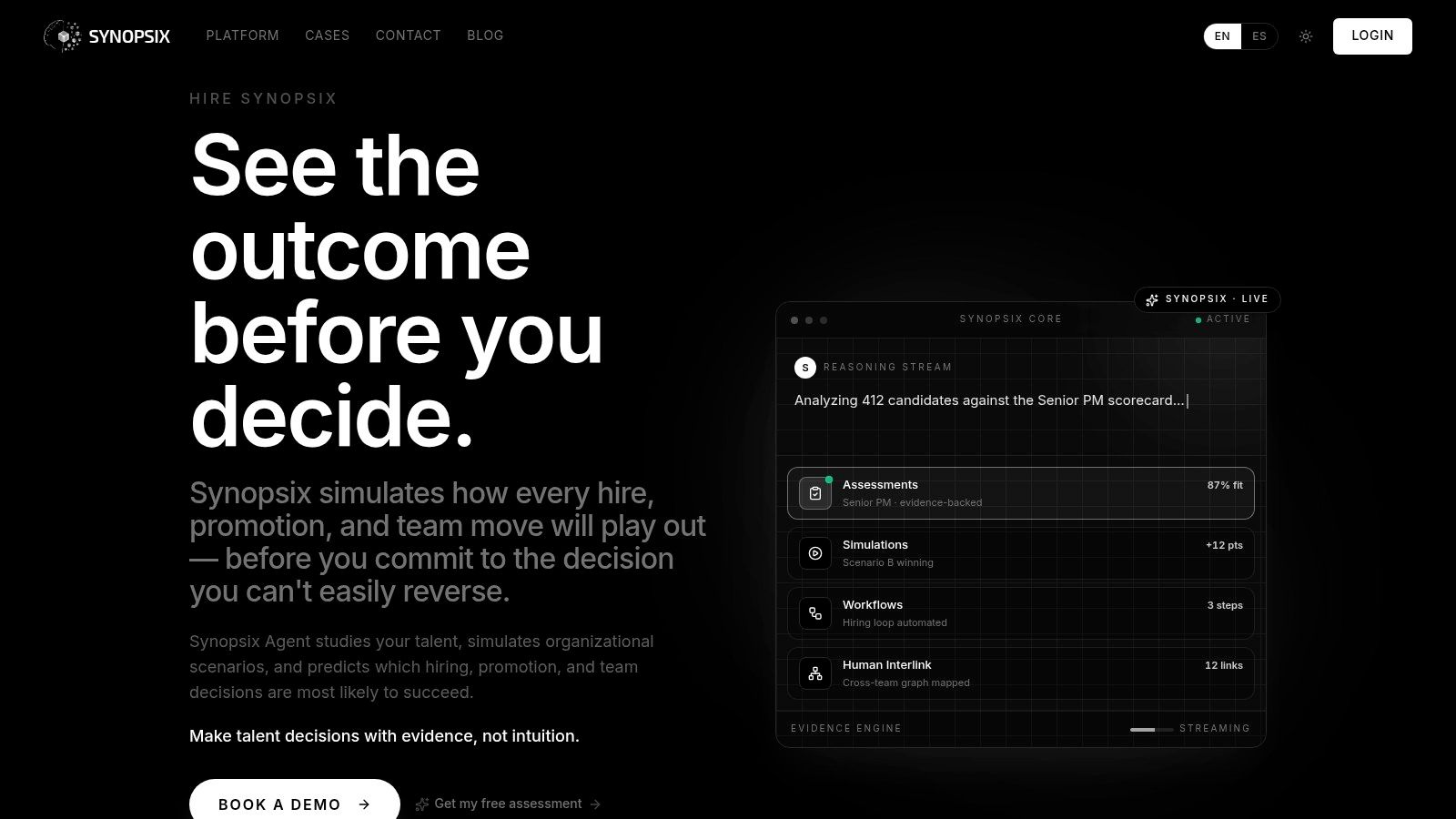
Synopsix is the strongest fit when team design begins with a high-stakes people question rather than a structural one. The platform positions itself as an AI Head of Talent, turning behavioral assessments into recommendations for hiring, promotions, team design, and development. Its workflow moves from assessment to comparable profiles, then to business-oriented interpretation and action through simulations, compatibility analysis, and development plans.
The product combines Assessments & Profiles, eight concise Intelligence Reports, Predictive Simulations, Human Interlink, Org DNA, Workflows, and the SYN-X AI agent. That combination gives it broader decision coverage than a personality-reporting tool. A leader can assess a candidate, compare the person with an existing team, model a proposed hire or promotion, and create follow-up actions without moving between disconnected systems.
Where Synopsix is differentiated
The most useful distinction is between diagnosis and decision support. Human Interlink is designed to map collaboration, influence, friction, complementarity, and tension as a living team graph. Predictive Simulations extend that analysis to prospective hires, promotions, and reorganizations. Org DNA adds an organization-specific benchmark for role and culture fit, rather than treating every company as if the same profile predicts success.
The vendor reports 40% faster hiring decisions, 60% fewer mis-hires, 98% assessment accuracy, 87% average evidence-match accuracy, 10K+ people decisions modeled, and 50K+ profiles generated on its own materials. Those figures are vendor claims, not independently verified outcomes, so buyers should test the underlying definitions during a pilot. The platform also claims a defensible hiring call in under 48 hours, with explainable AI and GDPR alignment. SOC2 is listed as in progress, which matters for procurement teams with formal security requirements.
> Practical rule: Treat Synopsix's outcome figures as hypotheses to validate against your own baseline, not as guaranteed returns.
Synopsix suits CHROs, talent acquisition leaders, people analytics and OD teams, executive search firms, and organizations making consequential hiring or promotion decisions. Its main drawbacks are the absence of public pricing, the need for quality assessment inputs, and the adoption work required to build a credible Org DNA model. Buyers can request a free personal assessment and live demo access through the [Synopsix website](https://synopsix.ai).
2. The Predictive Index Team Design and Team Discovery
The Predictive Index is built for organizations that want to connect behavioral preferences to business strategy and team composition. Its Team Discovery experience maps Team Type to Strategy Type, highlights strengths and caution areas, and produces action plans for leaders. That makes it more operational than an individual assessment library, especially when a company wants a common framework across recruiting, development, and performance conversations.
The platform supports organization-wide assessments and connects with HRIS, ATS, and collaboration tools. PI lists 97+ integrations on its website, which can reduce manual movement of assessment data into existing workflows. Team summaries in PDF format also make the product practical for workshops and stakeholder discussions.
Its strongest use case is a company with an established talent-optimization process and enough internal ownership to keep the model alive after implementation. Annual contracts and enterprise-level entry pricing create a higher commitment than a pay-as-you-go assessment service. The platform also notes that team analytics are most predictive for smaller groups, with guidance around teams of approximately 10 people, so buyers should be cautious about treating a team view as equally useful for very large departments.
For a deeper comparison of assessment-led team building, see this guide to [personality assessments for team building](https://synopsix.ai/blog/personality-assessments-for-team-building). PI's consultant network, onboarding, and support model can help larger organizations, but the annual-contract structure means the business case should include adoption ownership, not just license cost. Explore [The Predictive Index](https://www.predictiveindex.com) for current packaging and integration details.
3. Cloverleaf
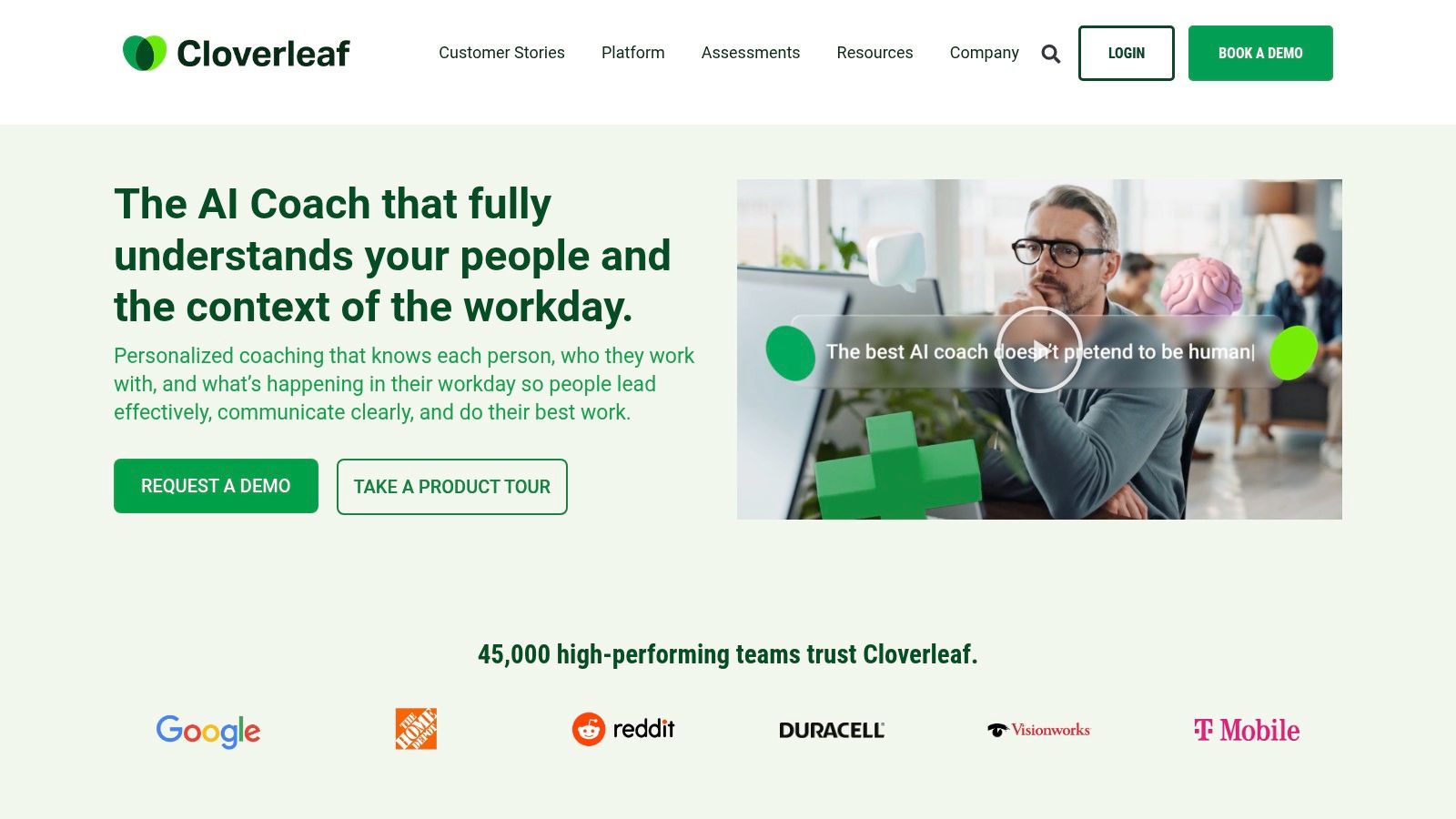
Cloverleaf takes a different route. Instead of asking leaders to interpret one assessment model, it centralizes multiple instruments, including DISC, Enneagram, and 16 Types, in team dashboards. Its Assessment Hub helps organizations normalize those inputs, while role-based reporting translates them into practical collaboration guidance.
The platform's most distinctive capability is its in-the-flow coaching. Cloverleaf can deliver AI coaching nudges through Slack, Microsoft Teams, and email, so the assessment remains present during everyday work rather than disappearing after a workshop. Optional pulse surveys and custom culture language can help organizations connect the assessment experience to their own vocabulary.
That design makes Cloverleaf attractive for HR teams dealing with assessment sprawl. Employees may already have results from different instruments, and a central dashboard can make those inputs more accessible. The weakness is interpretive consistency. Consolidating several models doesn't automatically make their outputs scientifically equivalent, so governance should define which instruments are appropriate for development, selection, or team conversations.
> A coaching nudge only changes behavior if managers trust it, understand it, and use it at the right moment.
Cloverleaf is best for organizations prioritizing collaboration habits, workshop reinforcement, and broad employee access. Enterprise accessibility work, including a VPAT, supports larger rollouts. Pricing for organization plans is quote-based, and the value depends heavily on change management. A focused pilot should test whether nudges lead to observable changes in meeting preparation, feedback quality, or conflict handling. Read the related analysis of [team dynamics software](https://synopsix.ai/blog/team-dynamics-software), then review [Cloverleaf](https://cloverleaf.me) for current integrations and plan details.
4. Humantelligence
Humantelligence sits between behavioral assessment and collaboration enablement. It creates individual and team behavioral and culture profiles, then places guidance inside tools people already use. Plug-ins and integrations cover Outlook, Microsoft Teams, Google, Slack, Zoom, and Webex, while HRIS single sign-on and enterprise deployment support broader adoption.
The practical benefit is proximity to the work. Users can receive day-to-day aids, such as email rewrites or communication advice, grounded in team data rather than relying on a workshop facilitator to keep the model active. That makes Humantelligence a plausible choice for organizations that want behavioral language to influence daily collaboration across multiple communication channels.
Its main limitation is also its defining feature. The product becomes more valuable as more employees participate, but broad participation creates a larger governance and enablement obligation. A small pilot may demonstrate the interface without demonstrating the full network effect, while a large rollout can expose unresolved questions about privacy, interpretation, and manager behavior.
Humantelligence advertises transparent per-employee pricing at scale, but enterprise buyers should still model total cost across participation and integrations. It isn't a substitute for deep organizational scenario modeling or a rigorous selection battery. It's better understood as a collaboration layer that makes behavioral insight available during work. Visit [Humantelligence](https://www.humantelligence.com) to assess its current deployment options.
5. Crystal Teams and Assessments
Crystal is designed for leaders who need personality intelligence close to a specific interaction. Its team, pair, conflict, onboarding, and meeting reports help users prepare for conversations, anticipate communication preferences, and select relationship tactics. Playbooks and templates extend the model into recurring team situations, while CRM and calendar integrations place guidance near existing workflows.
The product is particularly approachable for a manager who doesn't need a full organizational-design system. A leader preparing for a difficult meeting may get more immediate value from a focused interaction report than from a complex team model. That self-serve orientation can also support a controlled pilot with a small group before a wider rollout.
Crystal offers a free profile and clear self-serve pricing for individuals and team report capacity. Higher-volume use, data access, and API requirements move into custom plans, so the economics can change when the organization wants to embed personality data across systems. Buyers should also test whether the model works for their specific roles and cultures rather than assuming that an accessible report is automatically a valid hiring or promotion instrument.
Crystal's API creates an option for embedding personality intelligence into larger workflows, but that benefit comes with data governance and integration work. Review [Crystal](https://www.crystalknows.com) for current report access, team plans, and API availability.
6. Gallup CliftonStrengths Teams
Gallup CliftonStrengths is a strengths-based approach to team development and alignment. Through Gallup Access, managers can use Team Grid views, activity guides, role-specific reports, and mobile access to facilitate conversations about how people contribute. The framework creates a shared language that many organizations use for development planning and leadership discussions.
The tool is strongest when the question is, “How can this existing team use its capabilities more effectively?” It isn't primarily a hiring-selection system, and its team design value depends on members completing the assessment. That distinction should shape the business case. A team can use CliftonStrengths to discuss contribution patterns and development priorities, but leaders shouldn't treat a strengths distribution as a complete answer to role fit, compatibility, or future-state organization design.
A manager-led workshop can create momentum, especially when participants connect their strengths to concrete responsibilities and team agreements. The content ecosystem supports continued development beyond the initial assessment, which is useful for organizations that already have coaching or leadership programs.
> Strengths language helps teams discuss contribution. It doesn't remove the need to define accountability, capability requirements, or decision rights.
CliftonStrengths offers straightforward per-person assessment pricing and a recognizable model, which can make adoption easier than a complex analytics platform. Its limitations are equally clear: incomplete participation weakens the team picture, and the framework is better suited to development and alignment than selection. Explore [Gallup CliftonStrengths](https://www.gallup.com/cliftonstrengths) for current Team Grid and manager resources.
7. Belbin Team Roles Interplace
Belbin Interplace is a role-based tool for designing balanced teams. It produces individual, team, working-relationship, and job-comparison reports across nine team roles, with visual summaries and action ideas. Observer assessments add input beyond self-perception, which can make a team discussion more grounded when participants are willing to provide thoughtful observations.
The framework works well in intact-team workshops and organizational redesign conversations because it gives facilitators a simple vocabulary for discussing contribution patterns. A team can examine whether it has too much emphasis on some roles and too little on others, then decide whether to change responsibilities, add capability, or adjust working practices.
Its simplicity is both an advantage and a constraint. Belbin offers a practical lens on team contribution, but it isn't a full psychometric battery or a predictive workforce-simulation environment. Observer input also requires coordination, and credits-based per-report purchasing can become less attractive for large organizations than a subscription model.
Belbin is a sensible choice when an OD practitioner needs a clear workshop structure without implementing a broad people-analytics platform. It's less suitable when leaders need integrated HRIS data, organization-specific predictive modeling, or evidence for high-stakes selection. See [Belbin Team Roles](https://www.belbin.com) for current Interplace reports and observer options.
8. Orgvue
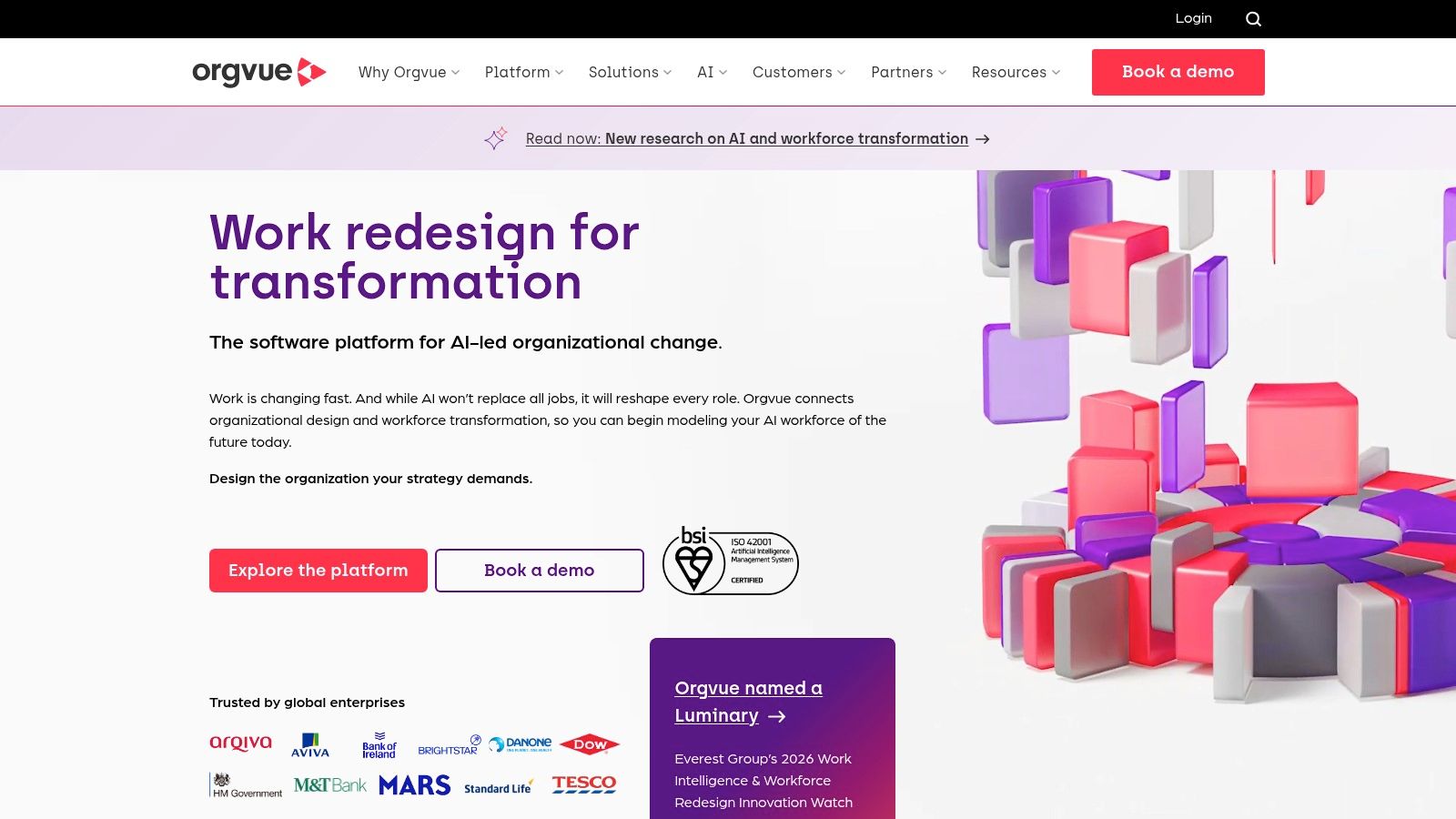
Orgvue addresses the structural side of team design software. It models operating structures down to the team level, supports scenario analysis, and connects organizational choices to headcount and cost implications. That makes it relevant to complex transformations, mergers and acquisitions, automation planning, and future-state operating models.
The platform is designed for leaders who need to compare alternatives rather than draw a single preferred org chart. HR, finance, and organizational-design teams can work with integrated data and governance processes while testing spans, layers, skills, and entity structures. The value is strongest when the organization already has reliable workforce data and dedicated OD ownership.
Orgvue doesn't replace behavioral assessment. It can show what a structure costs and how positions are arranged, but it won't independently establish whether two leaders will work well together or whether a proposed team has the right behavioral complementarity. That separation is important for buyers comparing Orgvue with people-intelligence products.
Organizational design decisions need more than visual polish. Leaders should connect each scenario to decision rights, role requirements, capability gaps, and implementation consequences. This [organizational design guide](https://synopsix.ai/blog/what-is-organizational-design) provides useful context for separating structure from people fit. Visit [Orgvue](https://www.orgvue.com) to evaluate its modeling and governance capabilities.
9. ChartHop
ChartHop is a broader people-operations platform with team-design building blocks. Its org chart, people analytics, dashboards, headcount planning, compensation, performance, engagement, goals, and AI features bring multiple workforce processes into one environment. Ask ChartHop and broad integrations add accessibility for people teams that want to reduce dependence on disconnected spreadsheets and workflow tools.
The strongest case for ChartHop is operational visibility. A people-ops leader can visualize reporting structures, evaluate headcount changes, route approvals, and connect planning with budget impact. Modular packaging allows organizations to begin with core functionality and add modules as needs expand.
That breadth also defines the limitation. ChartHop isn't primarily a deep psychometric or team-compatibility platform. It can help answer “where are our people, positions, and planning scenarios?” It's less equipped to answer “how will this specific combination of people handle conflict, decision-making, or leadership pressure?” Buyers should avoid asking a people-ops platform to supply behavioral evidence it wasn't built to generate.
ChartHop is a practical choice for organizations whose team-design problem is primarily structural and administrative. It can also serve as a system of record around a separate assessment or coaching layer. Review [ChartHop](https://www.charthop.com) for current modules, integrations, and pricing structure.
10. Saberr CoachBot
Saberr CoachBot focuses on sustained team coaching rather than selection or organizational modeling. The platform gives managers and teams structured meeting templates, development exercises, behavioral-science content, and habit-building resources. That makes it useful when the organization already knows which team behaviors need to change but struggles to maintain coaching after a workshop.
The product's value lies in repetition. A digital coach can place agendas, reflection prompts, and practical exercises into the rhythm of team management, extending development beyond occasional facilitated sessions. The platform also provides resources for managers working with remote and hybrid teams, plus case studies supporting global deployments.
Saberr isn't the right first purchase for a company trying to choose between candidates, compare promotion options, or model a new operating structure. It offers limited public pricing and is generally sales-led, so buyers should confirm support, roadmap, implementation expectations, and data handling before committing.
A useful evaluation question is whether managers will use the content without an HR facilitator present. If the answer is uncertain, the pilot should measure active usage, completion of agreed exercises, and manager follow-through rather than relying only on participant satisfaction.
> Choose Saberr when the problem is behavioral consistency after the decision, not evidence for making the decision.
Saberr is a good fit for organizations scaling manager habits across teams, particularly when a coaching program needs a repeatable digital layer. Explore Saberr for current CoachBot capabilities and deployment details.
Top 10 Team Design Software: Feature Comparison
| Product | Core focus & USP ✨ | Key features | Outcomes & UX ★ | Target audience 👥 | Pricing & scalability 💰 | |---|---:|---|---|---|---| | Synopsix 🏆 | AI-driven people intelligence; predictive simulations + living team graph ✨ | Rapid assessments (<30m), 8 Intelligence Reports, Predictive Simulations, Human Interlink, Org DNA, SYN‑X + Workflows | ★★★★★, vendor claims: 40% faster hiring, 60% fewer mis-hires, 98% accuracy; 50K+ profiles | 👥 CHROs, TA leaders, ppl-analytics, exec search | 💰 Enterprise/demo‑quote; free personal assessment & live demo | | The Predictive Index (PI) | Team-design mapped to strategy; talent optimization ✨ | Team Discovery, unlimited assessments on sub, 97+ integrations, PDF team summaries | ★★★★, mature UX, scalable for org-wide programs | 👥 Talent leaders, consultants, HR teams | 💰 Annual contracts; enterprise pricing | | Cloverleaf | In-flow AI coaching + assessment consolidation ✨ | Real-time dashboards, Assessment Hub, AI nudges (Slack/Teams), pulse surveys | ★★★★, practical daily nudges; reduces assessment sprawl | 👥 People ops, managers, team leads | 💰 Quote-based org plans; subscription scaling | | Humantelligence | Culture & collaboration analytics with comms plug-ins ✨ | Individual/team profiles, email rewrites, Outlook/Teams/Zoom plugins, SSO | ★★★, fast large-scale enablement; adoption-dependent | 👥 Large enterprises, collaboration-focused teams | 💰 Transparent per-employee pricing at scale | | Crystal | Personality intelligence for meetings & sales prep ✨ | Team/pair/conflict reports, playbooks/templates, CRM/calendar integrations, API | ★★★, self-serve flows; good for meeting prep | 👥 Managers, sales, individual contributors | 💰 Clear self-serve tiers; free profile to pilot | | Gallup CliftonStrengths (Teams) | Strengths-based team design + development content ✨ | Team Grid, manager/role reports, mobile access, content ecosystem | ★★★★, globally recognized model; strong development focus | 👥 Managers, L&D, org development | 💰 Per-person assessment pricing | | Belbin Team Roles (Interplace) | Classic team-role framework for balanced teams ✨ | 9 role reports, observer inputs, fast online delivery, job comparisons | ★★★, workshop-friendly; quick turnaround | 👥 OD practitioners, facilitators, team leads | 💰 Credits/per-report or quote; pay-as-you-go options | | Orgvue | Enterprise org design, workforce modeling & scenario planning ✨ | Operating structure modeling, cost/headcount scenarios, data governance | ★★★★, deep modeling for M&A/transformations; enterprise UX | 👥 OD teams, transformation leads, finance | 💰 Enterprise/quote; requires dedicated data ownership | | ChartHop | People-ops platform with modular org design & planning ✨ | Org charts, headcount planning, compensation modules, Ask ChartHop AI | ★★★★, modular, good usability for people ops | 👥 People ops, HRBP, finance partners | 💰 Modular pricing; per-employee expansion | | Saberr (CoachBot) | Digital team coaching to scale manager behaviors ✨ | Team/manager digital coach, structured agendas, habit-building content | ★★★, scales coaching beyond workshops; content-rich | 👥 Managers, team coaches, L&D | 💰 Sales-led pricing; quote-based deployments |
Choose the Decision Layer You Actually Need
The best team design software depends on what you're trying to decide. Behavioral assessment and predictive decision support belong at the center of hiring, promotion, succession, and compatibility questions. Tools in this category should help leaders compare people, understand likely interaction patterns, identify risks, and test alternatives before making a consequential decision.
That need is becoming more important as organizations build internal analytical capability. A longitudinal survey of 184 companies found that the median people-analytics staffing ratio improved from one specialist for every 4,000 employees in 2020 to one for every 2,900 employees in 2021, remaining at that level in 2022, according to [MyHRfuture's people analytics team-size analysis](https://www.myhrfuture.com/blog/2021/8/29/what-is-the-optimum-people-analytics-team-size). More organizations are therefore capable of asking evidence-based workforce questions, but better data doesn't automatically produce better design choices.
Choose strengths or team-role tools when the team already exists and the objective is facilitated development. Gallup CliftonStrengths can create a shared language for contribution, while Belbin can structure conversations about complementary team roles. Those tools are valuable for workshops and alignment, but they shouldn't be treated as complete answers to selection validity, organizational cost, or future-state structure.
Choose coaching platforms when the organization needs sustained manager habits. Cloverleaf, Humantelligence, Crystal, and Saberr place guidance closer to daily work, though they differ in whether they emphasize assessment normalization, interaction advice, collaboration support, or structured team exercises. Their ROI is more likely to appear in manager consistency, meeting quality, follow-through, and reduced dependence on one-off workshops than in an immediate org-chart output.
Choose Orgvue or ChartHop when the main problem concerns structure, headcount, cost, approvals, and operating-model scenarios. These products are better suited to workforce planning and organizational visibility than to behavioral compatibility. In practice, a mature operating-model decision may need both layers, one to model the structure and another to evaluate whether the people configuration can operate effectively inside it.
Governance deserves equal weight with capability. Passive collaboration data can overrepresent digitally intensive roles and underrepresent frontline, client-facing, or cross-time-zone work. Buyers should ask what data the platform needs, whether consent or works-council review applies, how regional differences are handled, and whether inferred influence or burnout signals are valid enough for high-stakes decisions. More data isn't automatically better data.
A scoped pilot should include:
Start with the narrowest decision that matters. If the problem is “Which candidate complements this leadership team?”, compare Synopsix with assessment-focused alternatives. If the problem is “How will this restructure affect cost and reporting lines?”, compare Orgvue and ChartHop. If the problem is “How do managers sustain better collaboration?”, evaluate Cloverleaf, Humantelligence, Crystal, or Saberr.
Then compare Synopsix's assessment-to-action workflow with the exact capabilities your use case requires. The decisive question isn't which platform has the longest feature list. It's whether the tool can produce a defensible decision, support responsible adoption, and show measurable value after the recommendation is made.
---
Synopsix turns validated behavioral assessments into practical guidance for hiring, team design, promotions, and talent development, combining comparable profiles, business-ready reports, predictive simulations, Human Interlink, and Org DNA. Visit [Synopsix](https://synopsix.ai) to compare its assessment-to-action workflow with the decision layer your organization needs, and request a demo or personal assessment for a closer evaluation.